
A candle and a reed diffuser can belong to the same fragrance collection without smelling identical in use.
The strongest pairings share a recognizable scent character while allowing each formula to perform in its own delivery system. For buyers, the goal is a coherent collection—not one fragrance concentrate copied into two products without finished-product testing.
What Does Matching Mean Across Formats?
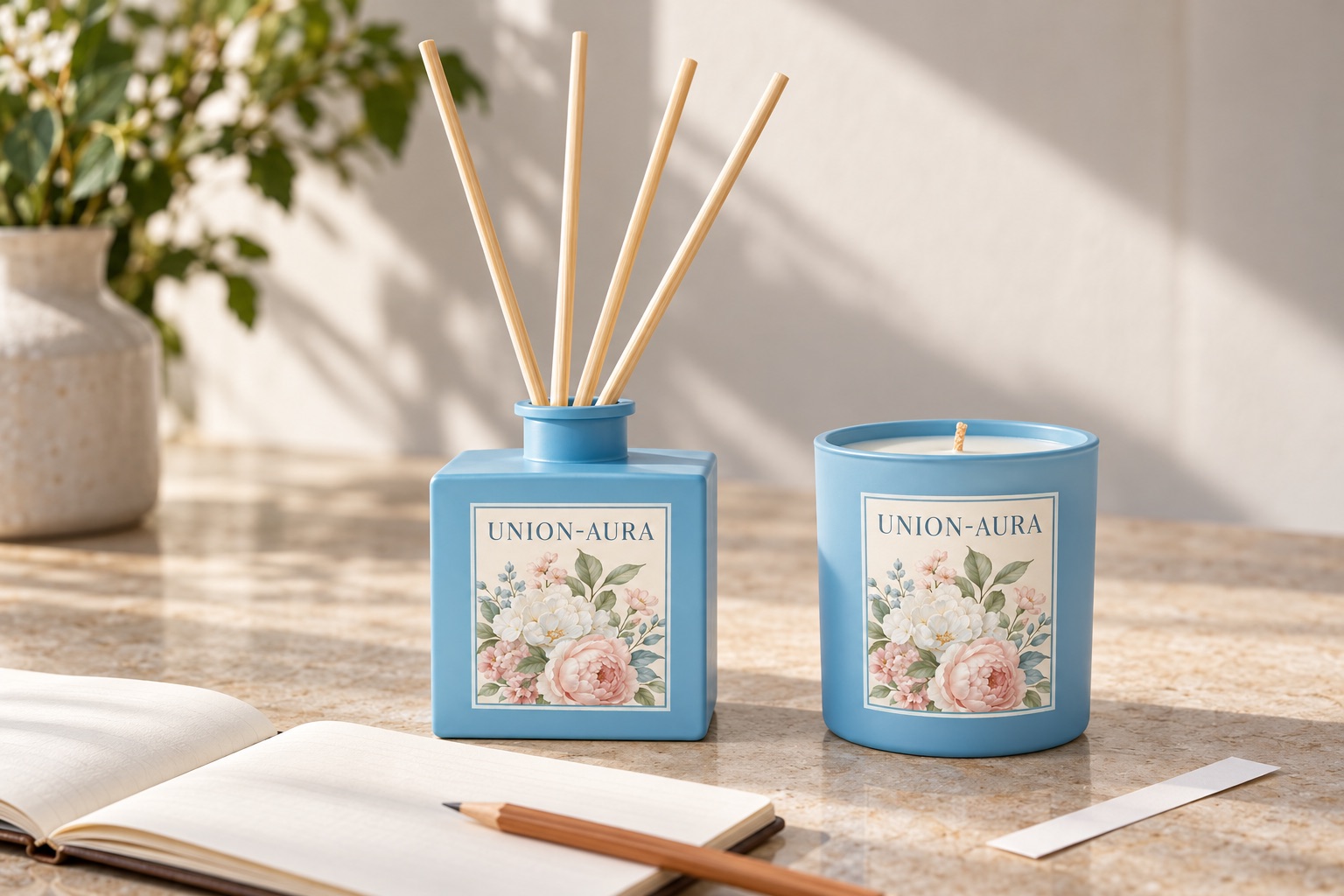
A matched pair should feel connected when customers encounter the products separately or together. That connection may come from a shared key note such as bergamot, rose or cedar; a consistent character such as airy floral or dry woods; or a recognizable balance of freshness, sweetness and depth.
The two products do not need identical top, heart and base-note emphasis. A candle may feel warmer after lighting, while a diffuser can present a steadier scent as liquid travels through the reeds and evaporates. Matching means customers can recognize the same fragrance idea even when the format changes how it is experienced.
Why the Same Fragrance Can Smell Different
A candle has a cold throw before lighting and a hot throw while burning. Its result depends on the fragrance, wax, fragrance load, wick and vessel working together. Candle performance should therefore be evaluated as a complete system rather than from fragrance oil alone.
A reed diffuser uses a different delivery system. The base carries fragrance through the reeds, and the exposed reed surface releases it into the room. Base, reed type, bottle opening and room conditions all affect the result. A fragrance that smells balanced in a candle may feel sharper, softer or less defined in a diffuser.
| Format | How Scent Is Released | Key Approval Variables |
|---|---|---|
| Candle | Cold evaporation before lighting; heat and the melt pool during burning | Fragrance, wax, load, wick, vessel and burn conditions |
| Reed diffuser | Liquid travels through reeds and evaporates from their exposed surface | Fragrance, diffuser base, reeds, bottle opening and room conditions |
A shared scent name or concentrate does not prove that the finished products will smell alike. Each format needs its own formula review and approval evidence.
Adapt the Fragrance to Each Product
Use the shared brief as the reference, then assess each finished product separately. In a candle, evaluate the unlit scent and the scent while burning under the planned test conditions. In a reed diffuser, assess the initial impression and the established scent after the liquid has travelled through the reeds.
If one version feels too sweet, too sharp or too faint, adjust the composition for that application rather than simply increasing fragrance load. Any reformulation should be checked for performance, material compatibility and the documentation required for its intended market and use. IFRA limits are applied to the finished consumer product for its intended-use category; a Certificate of Conformity does not replace a safety assessment.
How Buyers Can Evaluate a Matched Pair
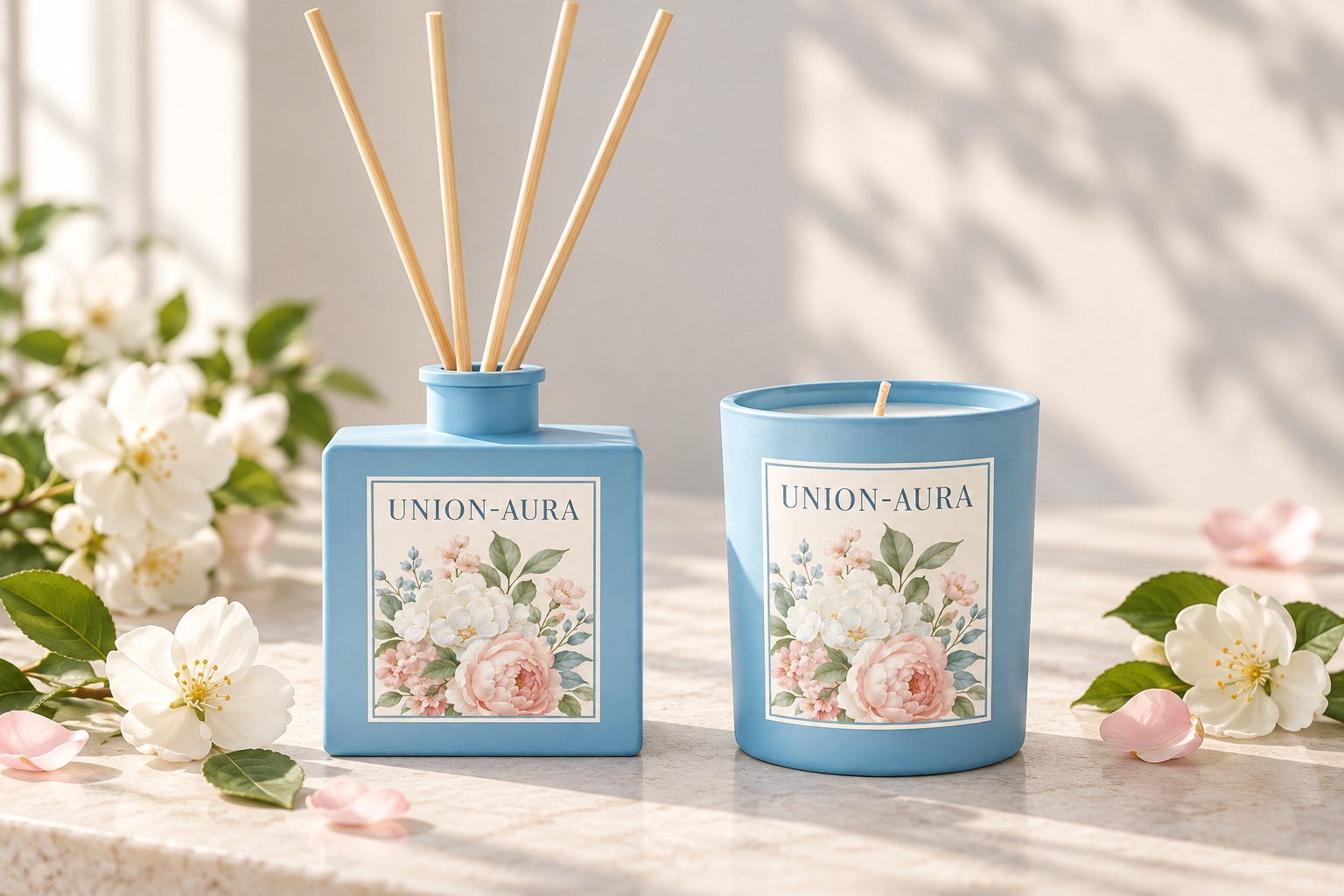
- Test the candle and diffuser in their final formats using the intended wax, wick, vessel, base, reeds and bottle.
- Evaluate them in separate sessions first so one product does not overpower or influence the other.
- Record the candle's cold and burning impressions and the diffuser's initial and established scent impressions.
- Compare the shared scent anchors, overall character, intensity and any unwanted note.
- Test them together separately and note whether the two scents feel harmonious or compete in the room.
Use the same room, approximate evaluation distance and written scorecard for each round. Record sample codes, formula revisions, test conditions and evaluator comments. Compare like with like and retain approved samples as production references.
Common Candle and Diffuser Pairing Mistakes
- Using the same name as proof: naming supports the collection story, but it cannot replace testing the finished products.
- Approving fragrance oil alone: a concentrate does not show how wax, wick, diffuser base and reeds alter the final scent.
- Forcing identical formulas: a format-specific adjustment may create a closer sensory match and a better customer experience.
- Changing one product without reviewing the pair: a revised fragrance, wax, base or reed can shift the collection's overall balance.
Buyer Checklist Before Approving the Collection
- The fragrance brief defines the shared scent identity and recognizable anchors.
- The candle and reed diffuser each have a format-specific formula and complete component specification.
- Finished products have been evaluated separately and together.
- Sample codes, formula revisions and test conditions are recorded.
- Performance, compatibility and market documentation have been reviewed for each product.
- Approved samples are retained and the pair will be rechecked after a key component change.
The Final Takeaway
Match the Scent Identity, Then Prove Each Product
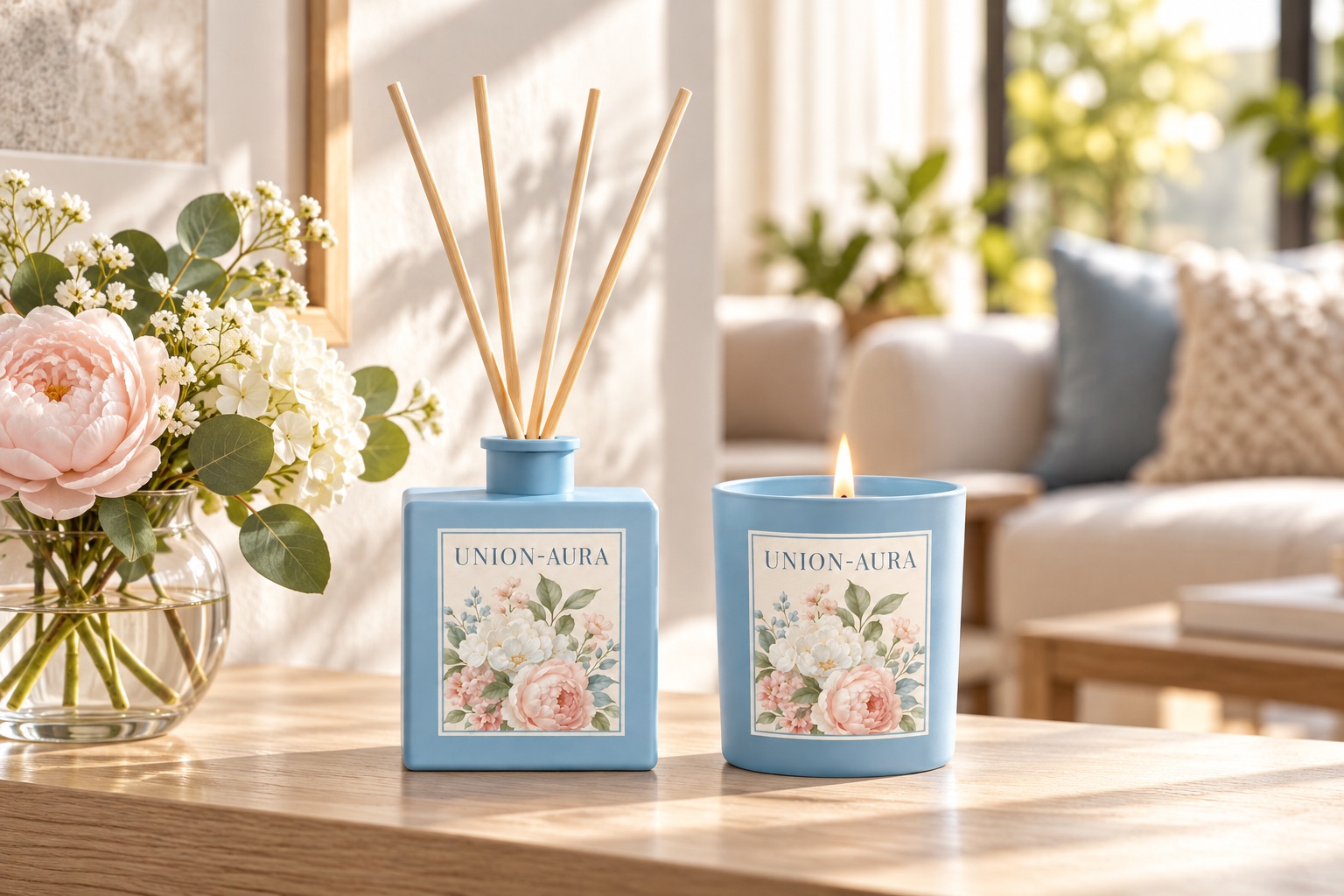
A well-matched candle and reed diffuser collection gives customers a familiar fragrance character in two different formats. Start with a clear brief, adapt the formulas to their delivery systems, and approve the pair through finished-product testing.
For a private-label collection, send UNION AURA your target fragrance direction, products, market and quantity so candle and reed diffuser samples can be developed around one coordinated brief.
Explore how wax, wick and fragrance shape a scented candle, learn what reed diffuser oil is made of, or review our OEM / ODM development process.