
A scented candle looks simple: wax, a wick and fragrance. But once the wick is lit, several processes begin at the same time.
Heat melts the wax around the wick. The liquid wax travels upward through the wick, turns into vapor near the flame and burns. At the same time, heat from the melt pool helps release fragrance molecules into the surrounding air.
The easiest way to understand a scented candle:
Wax provides the fuel, the wick delivers the fuel and heat releases the fragrance.

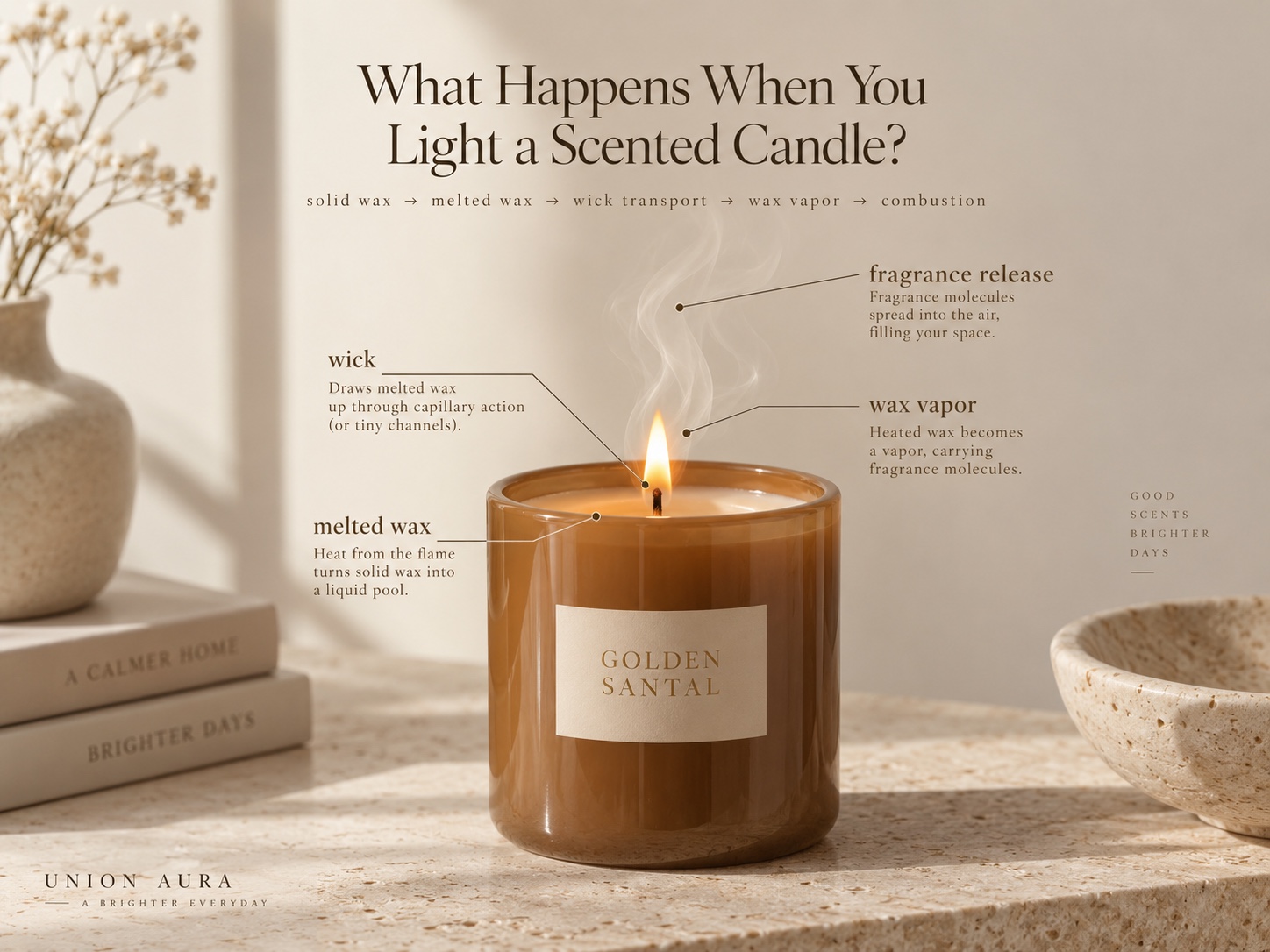
What Happens When You Light a Scented Candle?
At first, the flame from a match or lighter heats the wick and the wax immediately around it.
The solid wax begins to melt, forming a small pool of liquid wax. The wick then draws this liquid upward through capillary action. Near the hottest part of the flame, the liquid wax vaporizes, and that wax vapor reacts with oxygen and burns.
Solid wax → melted wax → wick transport → wax vapor → combustion
This also explains an important point: the wick itself is not the candle's main fuel. The wax is. The wick is the route that carries liquid wax toward the flame, where the wax becomes a combustible vapor.
What Does Candle Wax Actually Do?
Candle wax stores the fuel in a solid form that can be released gradually as the candle burns.
Once heated, the wax changes from solid to liquid. After it reaches the upper part of the wick, additional heat turns some of that liquid into vapor, which is then burned in the flame.
The heat produced by combustion melts more wax, allowing the process to continue. In normal candle combustion, the wax ultimately contributes to products including carbon dioxide and water vapor while releasing heat and light.
Different waxes can behave differently because melting characteristics, viscosity, crystalline structure and compatibility with fragrance are not identical. That is one reason a soy candle, paraffin candle or blended-wax candle may not perform the same way even when the vessel and fragrance are similar.
How Does the Wick Keep the Candle Burning?
The wick is best understood as a fuel-delivery system.
Its fibers draw melted wax upward toward the flame through capillary action. The amount of fuel delivered depends partly on the wick's construction and size.
This is why wick selection has such a strong effect on candle performance. A wick that supplies too much fuel can produce a larger flame, faster wax consumption, more soot and greater heat. A wick that supplies too little may create a weak flame and leave more unmelted wax behind.
There is therefore no universally correct wick size for every scented candle. Wax type, vessel diameter, fragrance formulation and other ingredients can change how a particular wick behaves. Commercial wick guides are normally starting points rather than substitutes for testing the finished candle.
How Does a Scented Candle Release Fragrance?
Fragrance oil is dispersed through the wax when the candle is made.
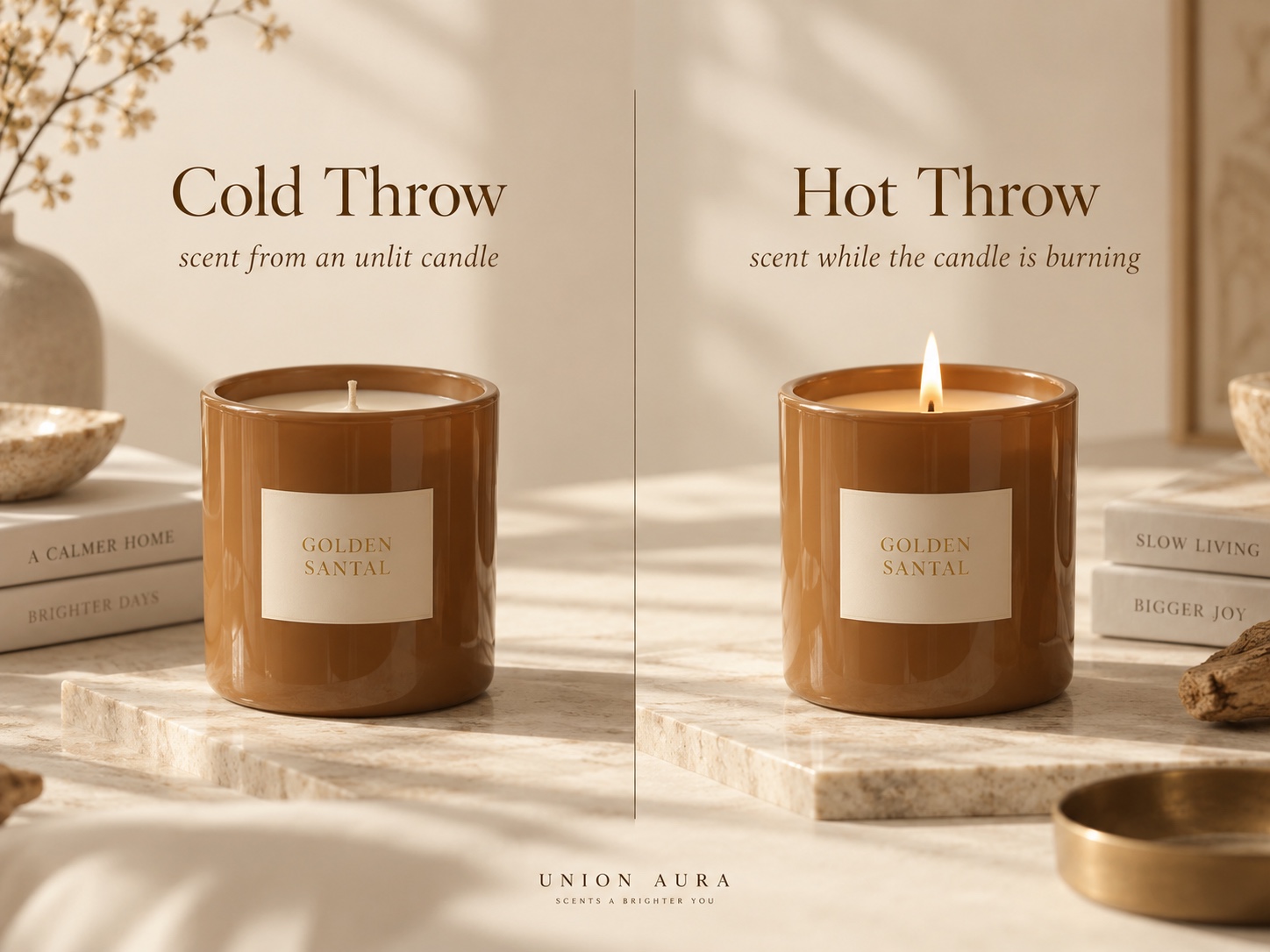
Even before lighting, some volatile fragrance molecules can reach the air. This is why an unburned candle can already have a noticeable scent, commonly called cold throw.
Once the candle is burning, the melt pool creates a larger heated liquid-wax surface. Heat increases the release of volatile fragrance compounds, producing what candle users commonly call hot throw.
But adding more fragrance oil does not automatically create a stronger-smelling candle. The fragrance still has to work with the wax, wick, vessel and overall burn system. If changing the fragrance load changes how the candle burns, scent performance may change as well.
What Is a Candle Melt Pool?
The melt pool is the layer of liquid wax that develops around the burning wick.
It serves two important functions. It supplies liquid wax to the wick, and it provides a warm surface from which fragrance can evaporate.
Melt-pool development depends on the entire candle configuration rather than burn time alone. Wick size, wax formulation, fragrance and vessel diameter can all affect how wide and deep the liquid layer becomes.
A candle with a poorly matched wick may form a narrow melt pool and leave significant wax at the sides. At the other extreme, too much heat can create an excessively aggressive burn. This is why the melt pool is useful for understanding candle performance, but it should not be judged separately from the flame and wick.
Why Do Some Scented Candles Smell Stronger Than Others?
A stronger candle is not simply a candle with more fragrance oil.
Scent output depends on how the wax, fragrance, wick, melt pool and surrounding environment work together.
The wick needs to generate enough controlled heat to melt and consume the wax properly. The wax must be compatible with the fragrance formulation, while the fragrance itself contains different volatile materials that do not all evaporate in the same way.
Room conditions matter too. Air movement, room size and temperature can change how noticeable a fragrance feels after it leaves the candle. That is why two candles containing similar fragrance percentages may still produce very different scent experiences.
Why Can a Candle Burn Differently Later in Its Life?
Candle performance is not completely static.
As the candle burns, the wax level falls and the flame moves deeper into the vessel. The thermal and airflow conditions surrounding the flame therefore change over time.
The wick also changes as it burns, and carbon can accumulate at its tip. These factors can influence flame size, soot, wax consumption and vessel temperature later in the candle's life.
This is why judging a candle only during its first burn gives an incomplete picture of how the product works. For consumers, it helps explain why a candle may appear different after several uses. For candle brands, it is also why finished candles are tested over repeated burn cycles before bulk production.
The Key Takeaway
The Simple Way to Understand a Scented Candle
A scented candle is a connected system.
Wax provides the fuel → wick transports the fuel → flame creates heat → heat releases fragrance
If those three elements are well balanced, the candle can maintain a stable flame, consume wax efficiently and release fragrance effectively. If the balance is poor, the result may be tunneling, soot, excessive wax consumption, a weak flame or disappointing scent performance.
For a production-ready candle, the full wax, wick, fragrance and vessel configuration should be tested as one system before bulk approval.