When people ask how long candles last, they may be asking two different questions: how many hours a candle can burn, or how long it can be stored before its fragrance and appearance begin to change.
Those are different measurements. Burn time depends on how quickly the candle consumes wax. Shelf life depends more on storage conditions, fragrance stability and exposure to heat, light and air.
Understanding both makes it easier to compare candles realistically.
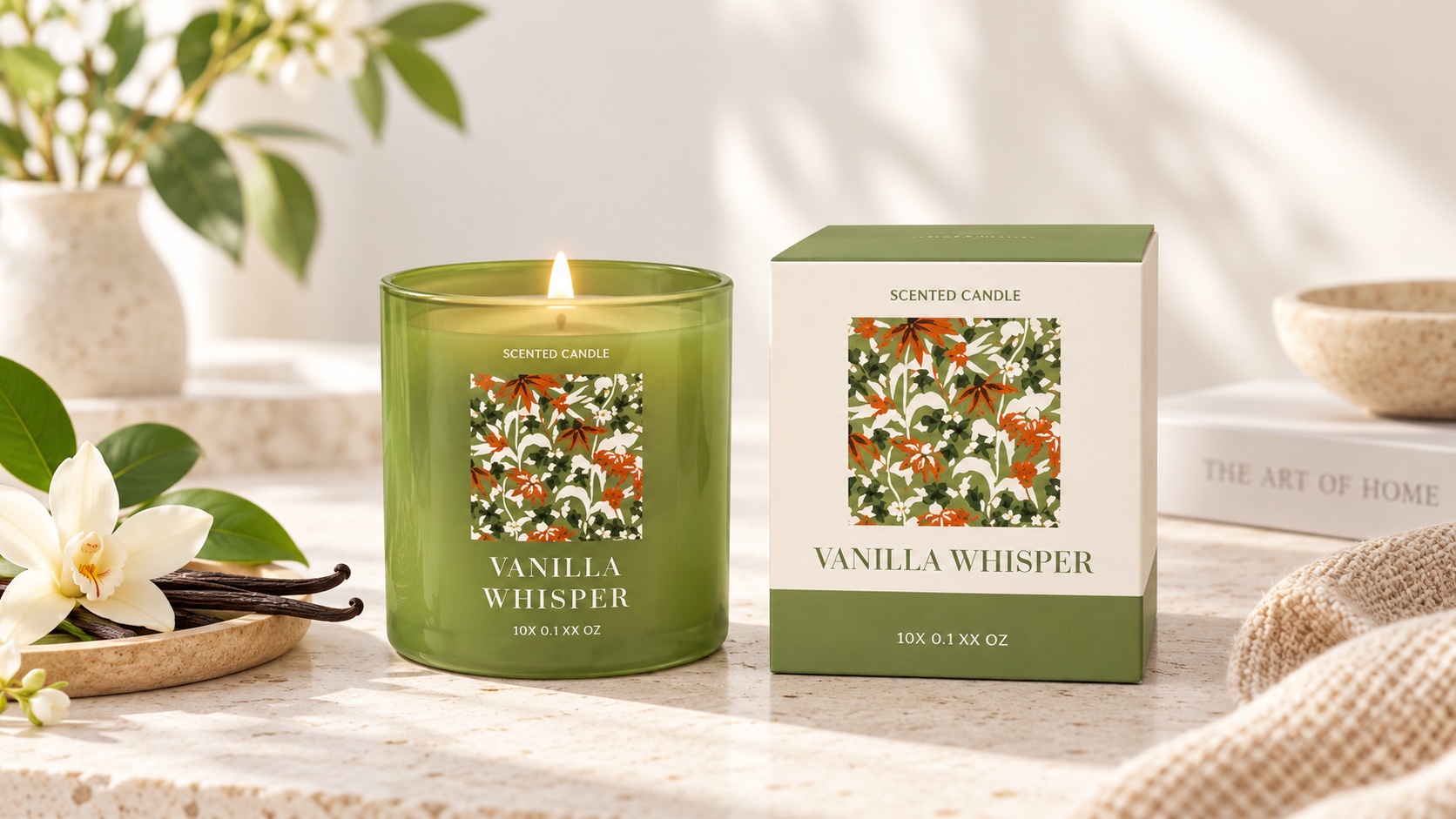
Burn Time vs Shelf Life
A candle's burn time is the total number of hours it can be burned before reaching its safe stopping point.
Its shelf life refers to how long the candle maintains acceptable fragrance, color and appearance during storage.
A candle can remain physically usable for a long time while its fragrance profile or surface appearance changes earlier. That is why “How long does a candle last?” cannot be answered with one number.
How Long Does a Candle Burn?
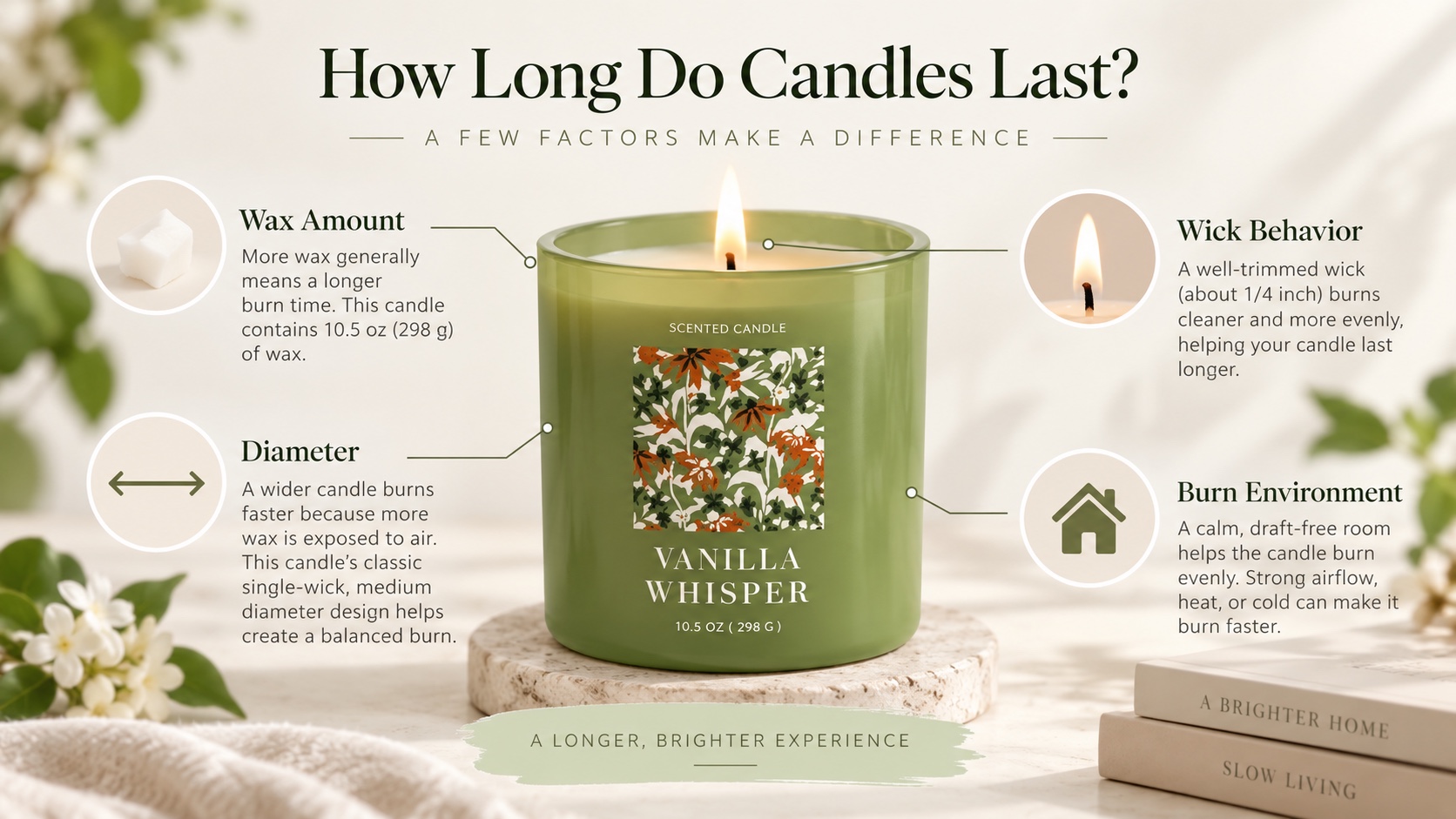
Candle burn time is influenced by more than wax weight.
Important factors include:
- Wax mass
- Candle diameter
- Wick size
- Number of wicks
- Wax formulation
- Fragrance load
- Burn-session pattern
- Airflow around the candle
This means two candles containing the same amount of wax can have very different burn times. A wide three-wick candle, for example, may consume more wax per hour than a narrower single-wick candle even when both contain the same net wax weight.
The most useful measurement is therefore the candle's actual burn rate, usually expressed in grams per hour.
How to Estimate Candle Burn Time
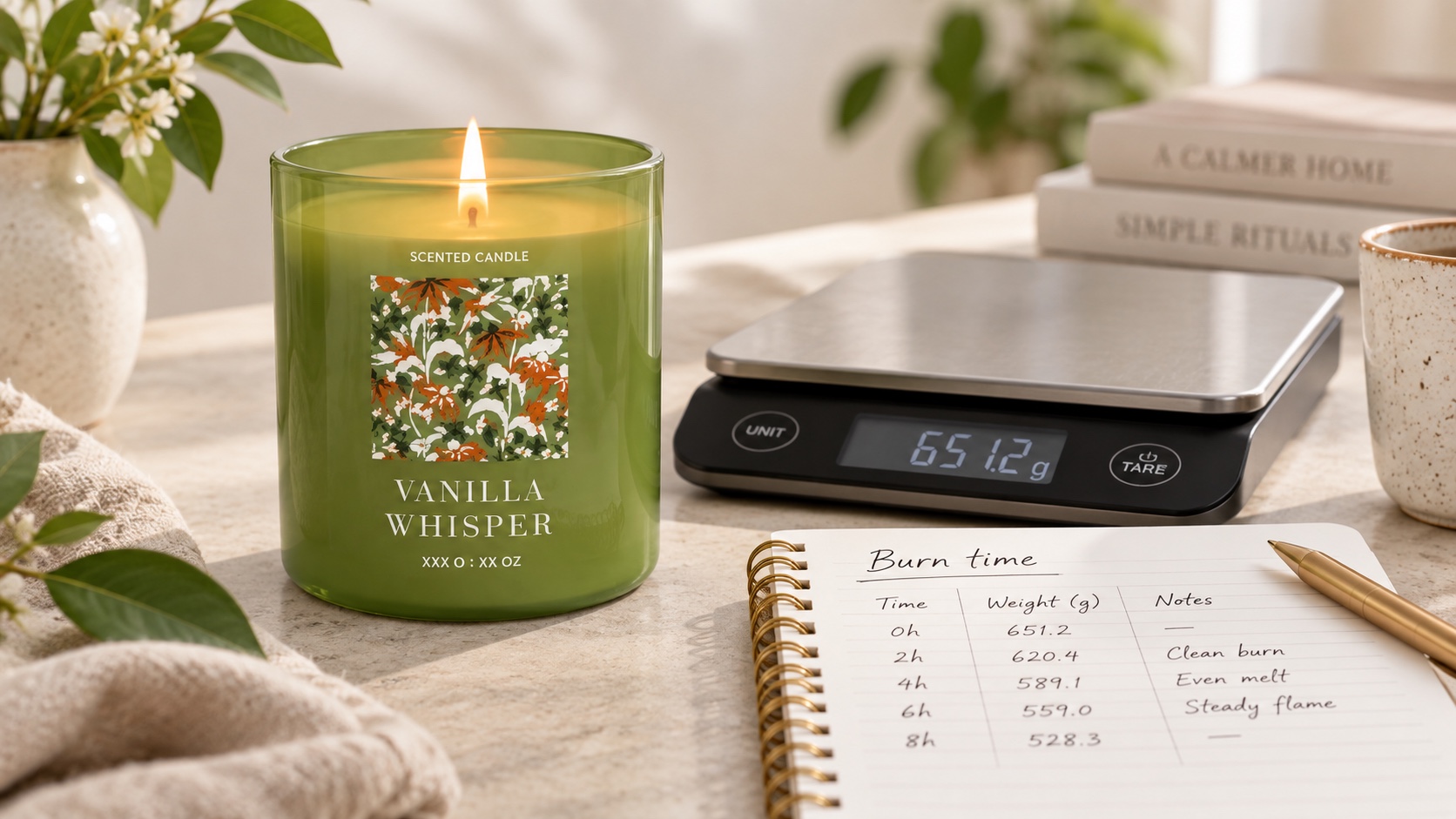
A practical way to estimate burn time is to measure how much mass the candle loses during a controlled burn test.
Average burn rate = wax consumed ÷ burn hours
Estimated burn time = usable wax mass ÷ average burn rate
For example:
- Candle weight before test: 450 g
- Candle weight after a 4-hour test: 430 g
- Wax consumed: 20 g
- Average burn rate: 5 g/hour
If the candle contains 200 g of usable wax, the estimated burn time is:
200 ÷ 5 = 40 hours
Burn rate can change as the candle burns lower, so a full-life burn test is stronger evidence than a single short test.
Why Same-Weight Candles Can Burn for Different Times
Net wax weight alone does not determine burn time. Consider three hypothetical candles:
| Candle | Usable Wax | Wick Count | Avg. Burn Rate | Estimated Burn Time |
|---|---|---|---|---|
| A | 200 g | 1 | 5.0 g/h | 40 h |
| B | 200 g | 2 | 7.2 g/h | 27.8 h |
| C | 300 g | 3 | 9.5 g/h | 31.6 h |
Illustrative example only.
The difference comes from the complete candle system. A wider candle usually creates a larger melt pool, which can increase wax consumption. Multiple wicks create several combustion points, while a larger wick can deliver more fuel to the flame and change melt-pool size and burn rate.
Wax formulation, fragrance load, dye and additives can also affect how the finished candle burns. Learn more about these interacting variables in our wax, wick and fragrance guide.
Does Burn Session Length Matter?
Yes. Very short burn sessions may prevent the melt pool from developing evenly across the candle surface, increasing the risk of uneven wax consumption or tunneling.
Extremely long sessions can increase vessel temperature, wick carbon buildup, soot and fuel consumption. Rather than applying one universal number to every candle, follow the manufacturer's stated burn instructions and maximum continuous burn time.
For product development, burn-session length should also remain consistent during comparative tests.
How Long Do Scented Candles Last in Storage?
A scented candle does not usually “expire” suddenly like food. Instead, fragrance and appearance may gradually change.
Storage conditions can affect:
- Fragrance intensity
- Top-note character
- Wax color
- Surface frosting or bloom
- Dust accumulation
- Label and packaging condition
More volatile fragrance materials, including some fresh, citrus and green notes, may change sooner than heavier woody, amber or musky notes. The candle may still burn, but the fragrance experience may no longer match the original product.
How Should Candles Be Stored?
For better shelf stability, store candles:
- In a cool, dry place
- Away from direct sunlight
- Away from radiators or high heat
- Upright
- Covered when possible
- Away from strong external odors
For jar candles, keeping the candle covered also helps reduce dust and surface contamination.
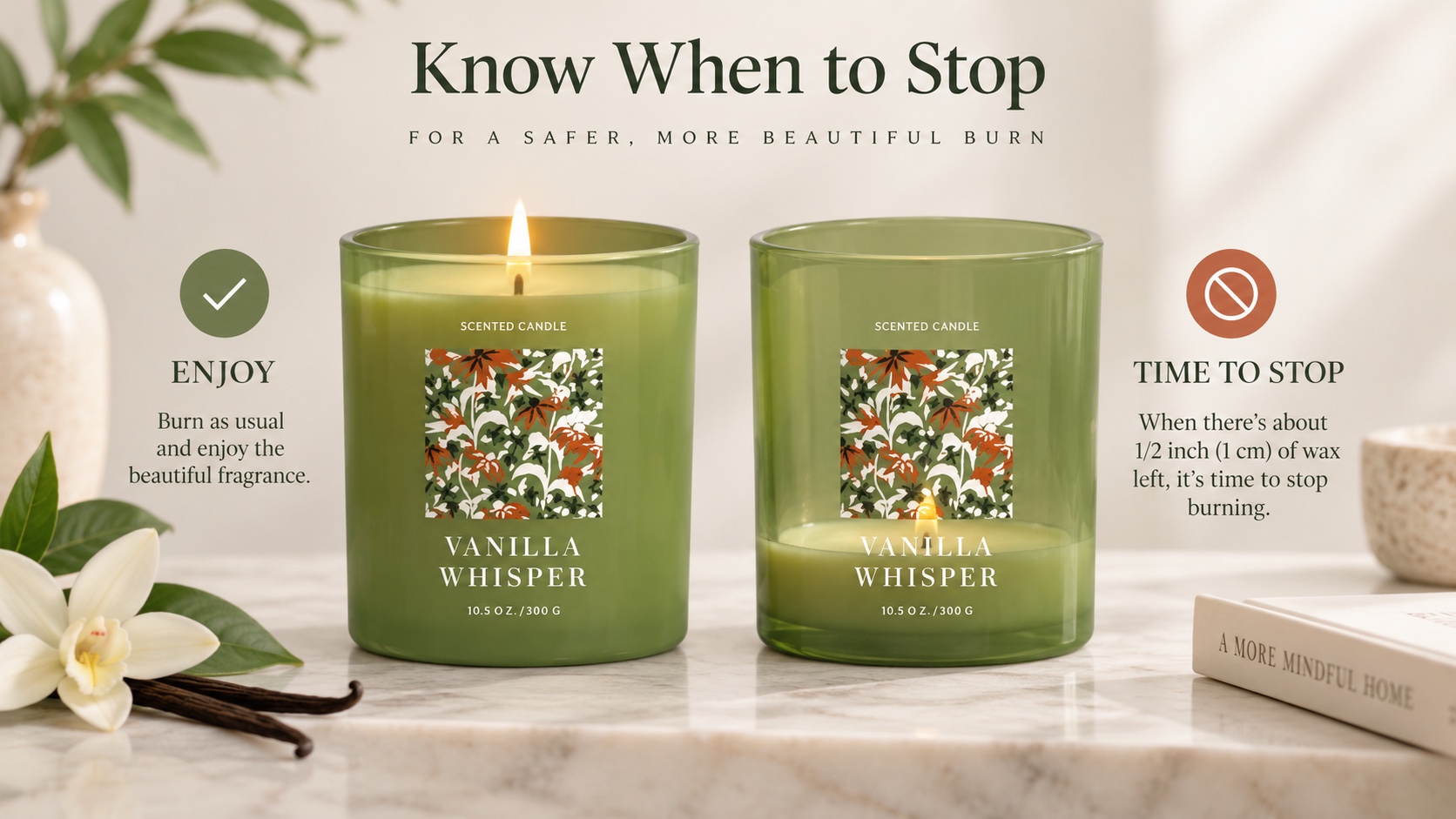
When Should You Stop Burning a Candle?
Do not burn a container candle until every visible trace of wax is gone. Stop using it according to the manufacturer's safety instructions, especially if:
- The vessel is cracked or damaged
- The flame becomes unstable
- Excessive soot develops
- The wick base or metal sustainer becomes exposed
- Only a small amount of wax remains at the bottom
A calculated burn-time estimate should never be treated as permission to burn the candle continuously until that number is reached. Full-life candle tests are conducted in controlled burn cycles for this reason.
Frequently Asked Questions
How long does a 200 g candle burn?
Weight alone is not enough to predict burn time. A 200 g candle's actual life depends on diameter, wick size, wick count, wax formulation and measured burn rate.
Do soy candles last longer?
Not automatically. Wax type is only one variable. Wick selection, vessel diameter, fragrance formula and candle design can have equally important effects.
Do three-wick candles burn faster?
A three-wick candle can consume more wax per hour because several wicks are burning at once, but the actual rate depends on wick size and vessel design.
Do scented candles expire?
Not in the same way as food. Over time, fragrance strength, color and surface appearance may change, especially if the candle is exposed to heat, sunlight or air.
The Key Takeaway
Measure Burn Time; Control Shelf Life
The best way to understand how long a candle lasts is not to look at wax weight alone.
Usable wax mass + actual burn rate in g/hour
For shelf life, control heat, light, air exposure and storage conditions. Two candles with the same weight can deliver very different burn hours, which is why measured burn testing is more useful than relying on size or wax type alone.