A scented candle sample should not be approved simply because the vessel looks right and the fragrance smells good.
Before bulk production, the buyer needs to confirm the candle as a complete system: wax, fragrance, wick, vessel, fill weight, artwork and packaging. A change to any performance-critical component can alter burn behavior, fragrance performance, appearance or production consistency.
The purpose of sample approval:
Create a production standard that both the buyer and manufacturer can reproduce during mass production.
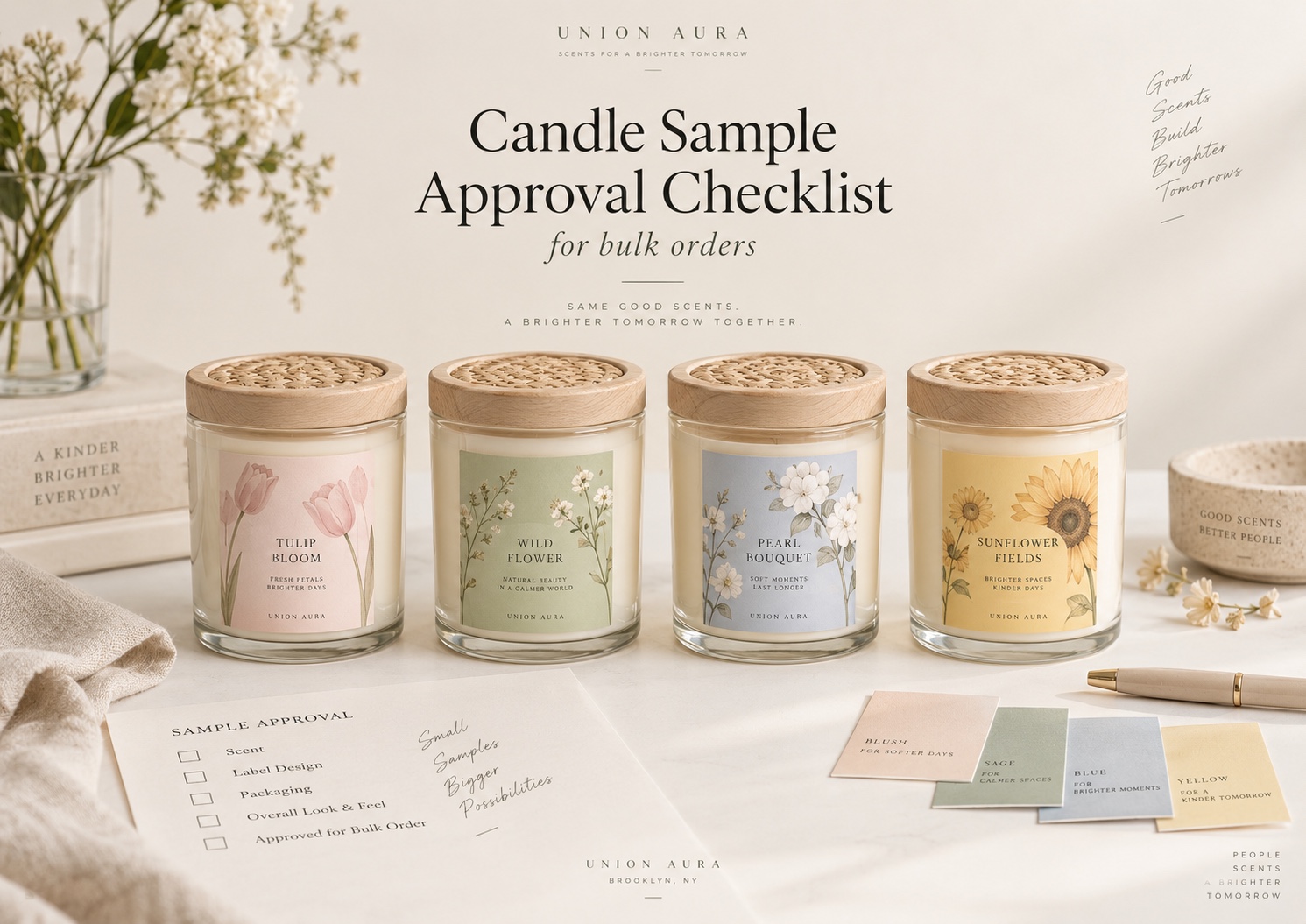
1. Approve a Production-Equivalent Candle Sample
The final approval sample should represent the intended bulk product as closely as possible.
Use the approved wax or wax blend, final fragrance code and load, production wick, intended vessel, target fill weight, color system, label or decoration, lid and retail packaging.
Candle components do not work independently. Wax type, fragrance load, wick selection, dye and vessel geometry can all affect how a candle burns. CandleScience recommends testing the actual combination of wax, fragrance, wick, dye and container instead of treating wick charts as final specifications.
A wick that performs well in an unscented wax sample should not automatically be approved for the final fragranced candle.
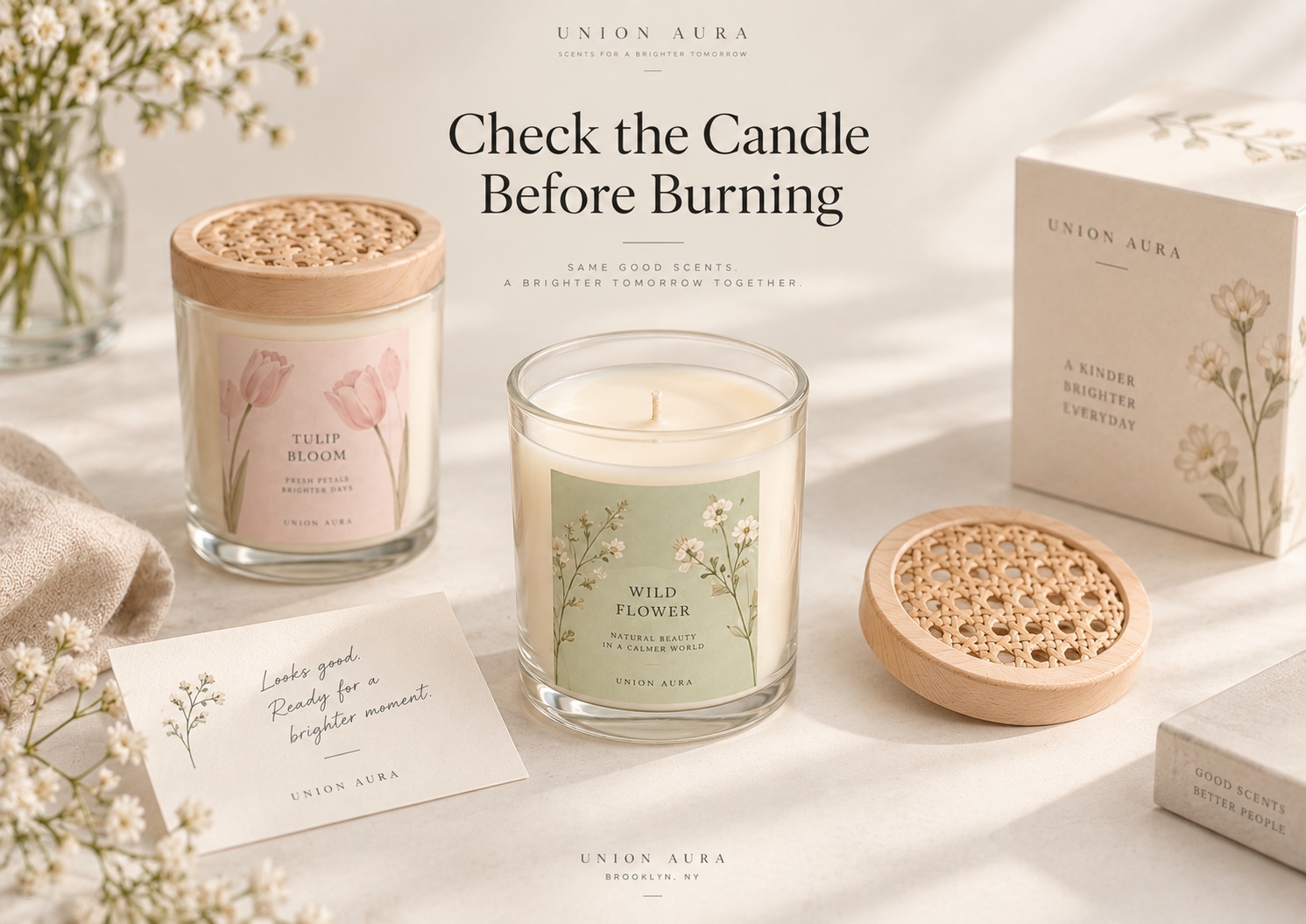
2. Check the Candle Before Burning
Before the first burn, document the sample in its original condition.
The wick should be centered and cut to the agreed length. Confirm the target fill weight and check the wax surface for cracks, sweating, discoloration or other visible defects.
The vessel finish, label position, printing, lid fit and box assembly should match the intended production version.
This becomes the Day 0 reference. If discoloration, wick movement, vessel staining or surface changes appear later, the buyer and supplier can compare them with the original sample instead of relying on memory.
Keep with the approval record:
Front, side and top photographs of the untouched sample.
3. Run a Controlled Burn Test
Visual approval is not enough for a product that will eventually be burned.
ASTM F2417-26 covers minimum fire-safety requirements for candles and candle ensembles under controlled test conditions. It should not be confused with a factory's internal development burn test; the two may serve different purposes.
During development, observe the candle throughout its usable life rather than judging it from the first lighting.
Record flame behavior, melt-pool development and whether the wick builds excessive carbon or leans away from its original position. As the wax level falls, continue checking soot, wax consumption and vessel condition.
The later stages matter because the heat conditions inside a container change as the flame moves deeper into the vessel. CandleScience's burn-test guidance similarly recommends repeating burn cycles until the candle approaches the end of its usable wax.
Important:
One successful first burn does not mean the candle has passed its burn test.
4. Evaluate Cold Throw and Hot Throw Separately
Fragrance approval should not be based only on smelling the candle before lighting it.
Cold throw describes the scent perceived from the unburned candle. Hot throw describes fragrance performance while the candle is burning.
They are related, but they are not interchangeable.
A fragrance concentrate may smell correct from the bottle while performing differently after incorporation into wax. Wax type, fragrance load, wick selection, vessel diameter and cure conditions can all affect the finished result.
Assess hot throw only after the intended production formula and wick configuration have been established. CandleScience also recommends finalizing burn performance before using hot throw as an evaluation criterion, because a candle can appear to give strong fragrance during early burns while later proving over-wicked.
5. Inspect Wick Performance Throughout the Test
Wick approval is not simply a question of whether the candle stays lit.
Evaluate the relationship between flame size, melt-pool development, carbon buildup, soot and remaining wax across repeated burns.
An oversized wick can produce a larger flame, faster wax consumption, heavier carbon buildup and increased vessel temperature. An undersized wick may struggle to maintain an adequate melt pool and can leave substantial wax behind.
Supplier wick recommendations are starting points because fragrance load, dye, wax and container dimensions can change the result.
This is why changing the wick after sample approval is not a minor production adjustment. If the wick specification changes, reassess the relevant burn performance using the final wax, fragrance and vessel combination.
6. Approve Artwork and Packaging on the Physical Sample
Digital artwork approval and physical product approval are different checkpoints.
The final candle sample should confirm that the label sits correctly on the actual vessel, printed colors and decoration are acceptable, the lid fits properly and the finished candle fits its retail packaging as intended.
Confirm barcode readability and the approved artwork revision at this stage. For the U.S. market, ASTM F2058-07(2021) covers fire-safety information placed on candle units of sale, including requirements for visibility of the warning at the point of sale.
Check the applicable labeling requirements for the destination market and product configuration before production.
7. Freeze the Golden Sample Before Bulk Production
The final approval should create more than one physical candle. Freeze the complete product specification alongside the approved sample.
| Item | What Should Be Frozen |
|---|---|
| Wax | Wax type or formula code |
| Fragrance | Fragrance code and approved load |
| Wick | Wick series, size and quantity |
| Vessel | Model, color and finish |
| Fill | Target fill weight |
| Artwork | Approved revision |
| Packaging | Approved box, label and accessories |
| Burn Test | Approved test record |
| Approval | Date and buyer confirmation |
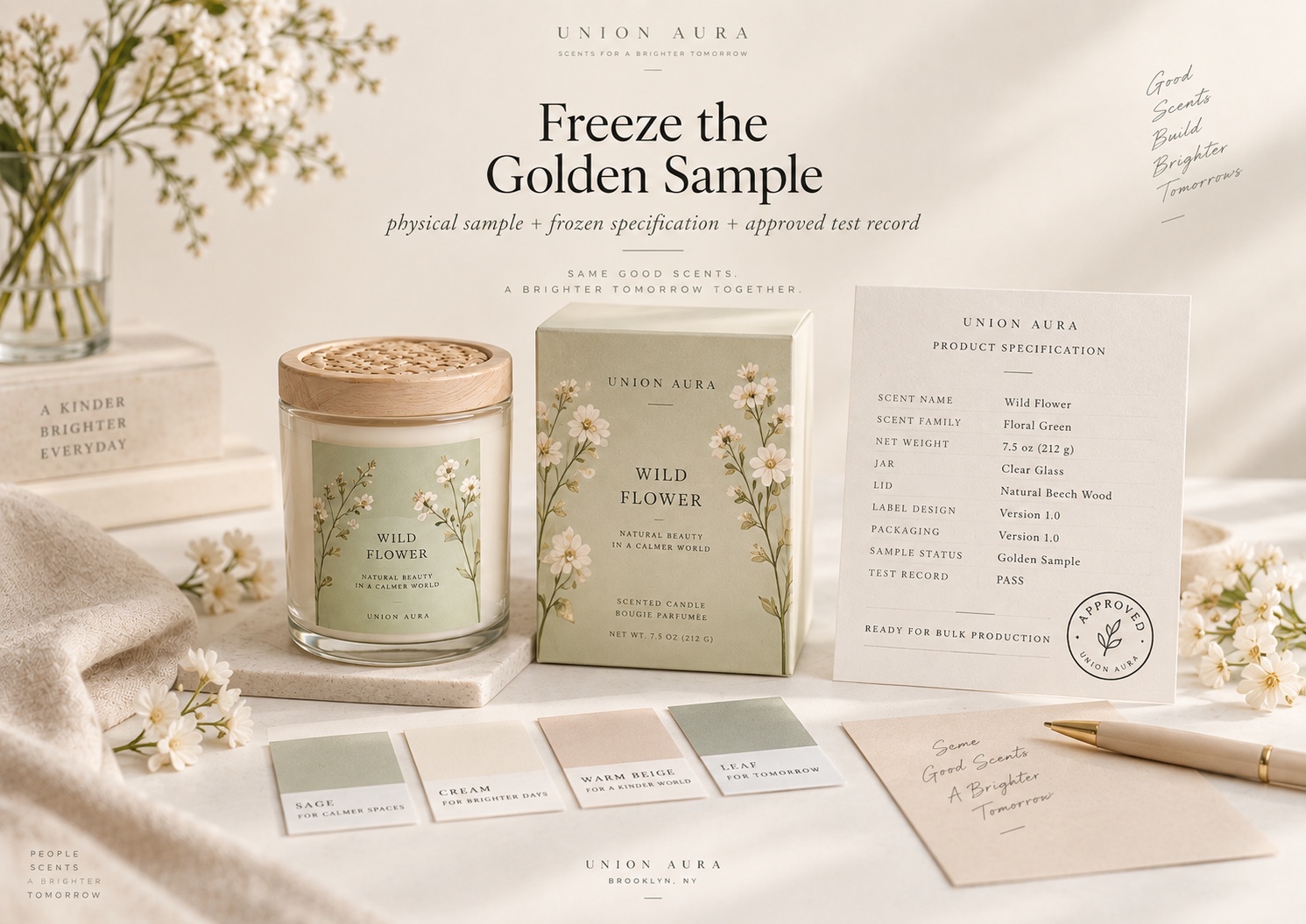
A useful production reference is:
Physical Golden Sample + frozen specification + approved burn-test record
A candle stored in a sample room without its wick code, fragrance specification, fill target, artwork revision and test record gives the production team limited traceability several months later.
8. Before Releasing Bulk Production
Do not release bulk production based only on an approved fragrance concentrate, an empty vessel, digital artwork or a candle that has completed only its first burn.
The final sample should represent the intended production candle as closely as possible. If the wax, fragrance load, wick, vessel or another performance-critical component changes afterward, assess whether the relevant approval and testing need to be repeated.
The Key Takeaway
Lock the Product Configuration Bulk Production Must Reproduce
The purpose of candle sample approval is not simply to approve how a prototype looks. It is to lock a complete, tested and traceable product configuration.
Formula → Day 0 Check → Burn Test → Fragrance → Wick → Packaging → Golden Sample → Bulk Release
Send UNION AURA your vessel specification, fragrance brief, artwork and target order quantity to prepare a production-equivalent candle sample for approval before bulk production.