
A scented candle is a candle made with wax, a wick and added fragrance designed to scent a space while it burns.
Unlike an unscented candle, its purpose is not only to provide light or decoration. It is also a home fragrance product, created to add atmosphere through scent.
If you are new to scented candles, the easiest way to understand them is to look at three things: what they are made of, what types are available and how fragrance is experienced before and during burning.
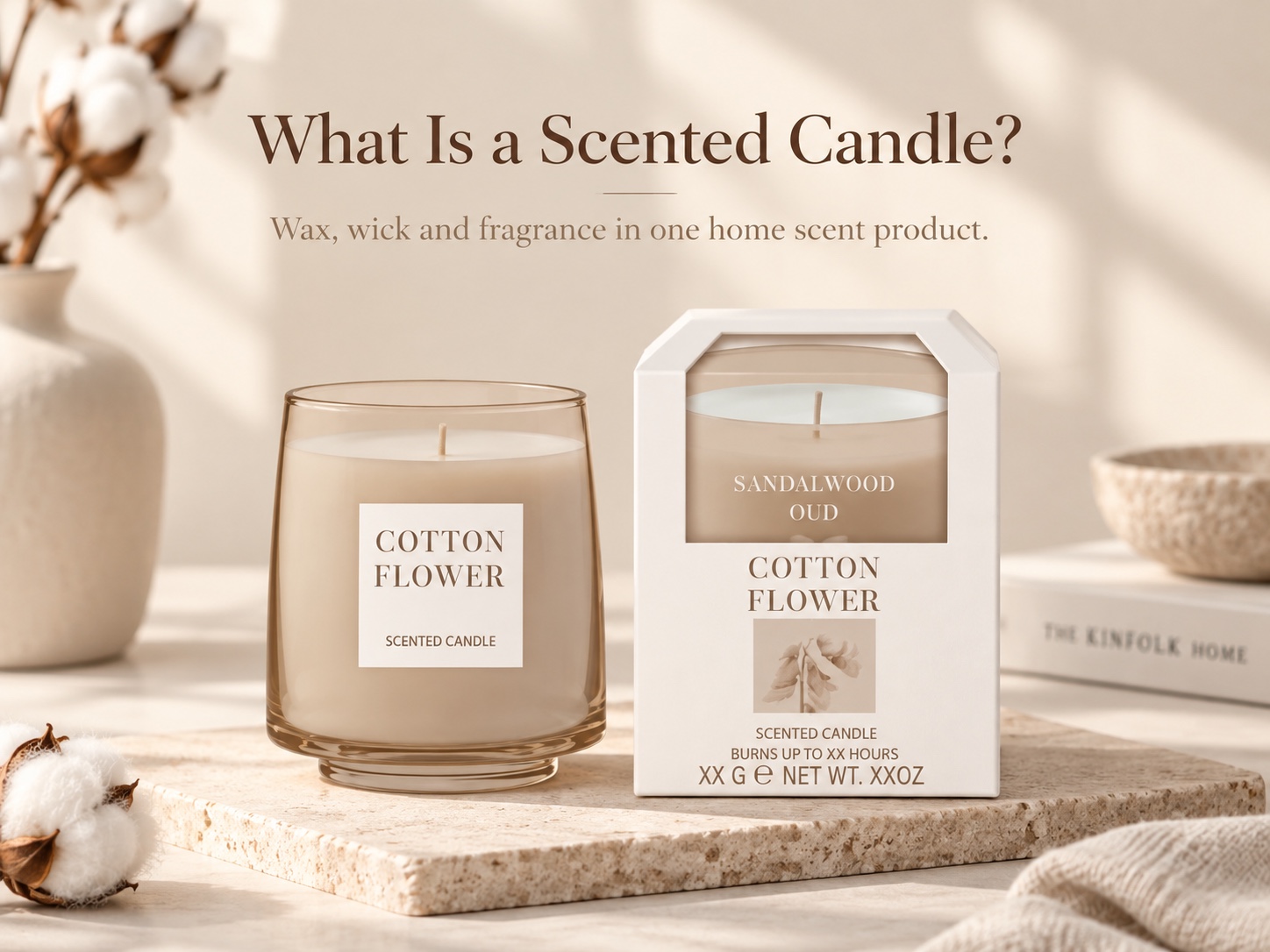
What Is a Scented Candle?
A scented candle combines a fuel source—usually wax—with a wick and fragrance.
The fragrance may come from fragrance oils, essential-oil components or blended fragrance systems developed specifically for candle use. When the candle is lit, the wax warms and the fragrance becomes more noticeable in the surrounding space.
That is the basic idea. The detailed science of how wax, wick, heat and fragrance interact during burning is covered in our guide to how scented candles work.
What Is a Scented Candle Made Of?
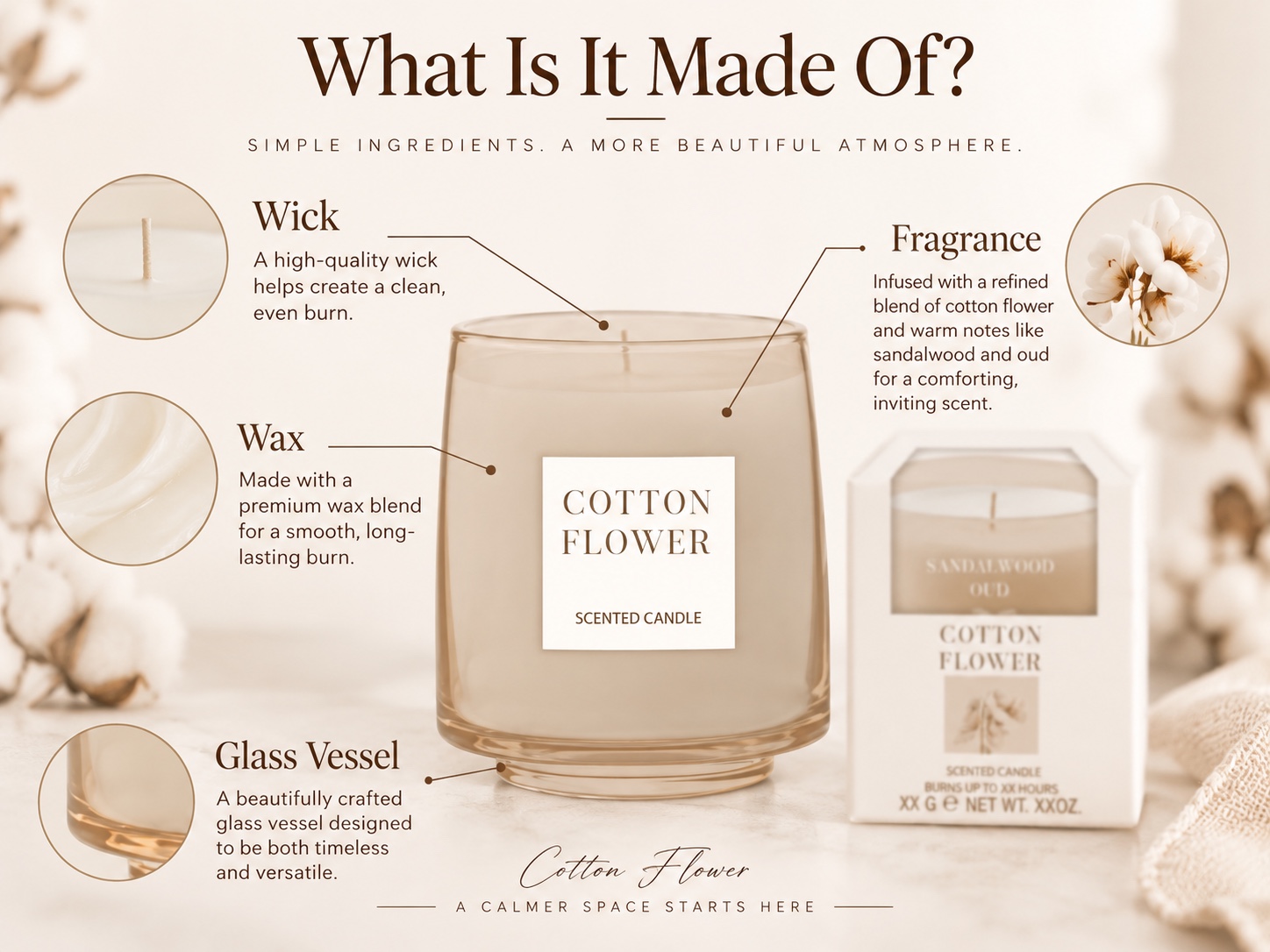
Most scented candles contain three main components.
Wax
Wax forms the body of the candle and acts as the fuel.
Common options include:
- Soy wax
- Paraffin wax
- Coconut wax
- Beeswax
- Wax blends
Different waxes can vary in appearance, melting behavior, fragrance compatibility and manufacturing performance. There is no single wax that is automatically best for every candle. The right choice depends on the desired product style, fragrance system, vessel and burn performance.
Wick
The wick controls how the candle burns.
Common wick types include cotton wicks, paper-core wicks and wooden wicks. The wick should be matched to the candle diameter, wax system and fragrance formula. A wick that is too small or too large can affect the way the candle burns, so wick selection is part of product development rather than simply a decorative choice.
Fragrance
Fragrance gives the candle its scent identity.
A candle may use:
- Fragrance oil
- Essential-oil components
- A combination of aromatic materials
A candle labeled with a natural or botanical scent does not necessarily contain only essential oils. Many high-quality scented candles use carefully developed fragrance blends to achieve stability, consistency and the intended scent profile.
Common Types of Scented Candles
Scented candles come in several formats.
| Candle Type | Typical Use |
|---|---|
| Jar candle | Everyday home fragrance |
| Tin candle | Travel, gifting and casual retail |
| Pillar candle | Decorative display |
| Taper candle | Dining and decorative settings |
| Multi-wick candle | Larger vessels and broader wax surfaces |
| Seasonal candle | Holiday and limited-edition collections |
| Figure candle | Decorative and gift-focused products |
The format affects more than appearance. Vessel size, candle diameter, wick configuration and wax weight all influence how the finished product should be developed.
Cold Throw vs Hot Throw
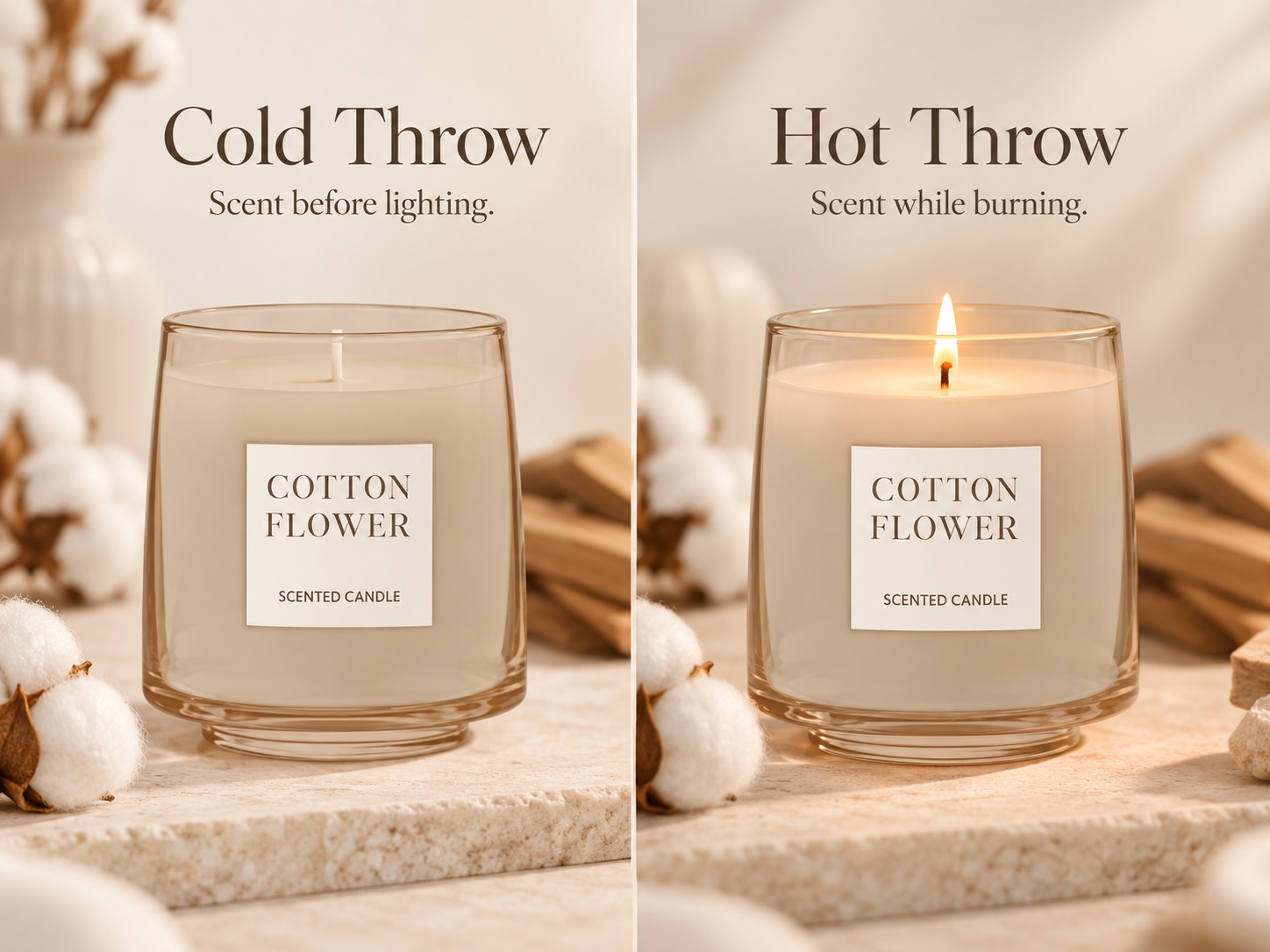
Two terms you will often see when discussing scented candles are cold throw and hot throw.
Cold throw is the fragrance you can smell when the candle is unlit. Hot throw is the fragrance released while the candle is burning.
A candle can smell strong when cold but perform differently once lit. For this reason, cold throw alone is not enough to judge fragrance performance.
For buyers and consumers, the more useful question is:
Does the candle deliver a pleasant and consistent scent both before and during use?
Understanding Candle Fragrance Notes
Candle fragrances are often built in layers.
Top Notes
These are the first notes you notice. Typical examples include citrus, green notes, fresh herbs and light fruits.
Middle Notes
These form the main body of the fragrance. Common examples include floral notes, spices, tea and aromatic herbs.
Base Notes
These provide depth and lasting character. Examples include woods, amber, musk, vanilla and resinous notes.
A scented candle is often designed as a complete fragrance composition rather than a single smell.
How to Choose a Scented Candle
When choosing a candle, consider the space and the type of fragrance experience you want.
- For a bedroom, softer floral, clean or woody fragrances may work well.
- For a living room, a fuller fragrance profile may be more suitable.
- For bathrooms and smaller spaces, fresh citrus, herbal or clean scents can feel appropriate.
- For seasonal use, warm woods, spices, vanilla or festive fragrance profiles are common choices.
The candle size also matters. A very small candle and a large multi-wick candle are designed for different room sizes and fragrance expectations.
What Makes a High-Quality Scented Candle?
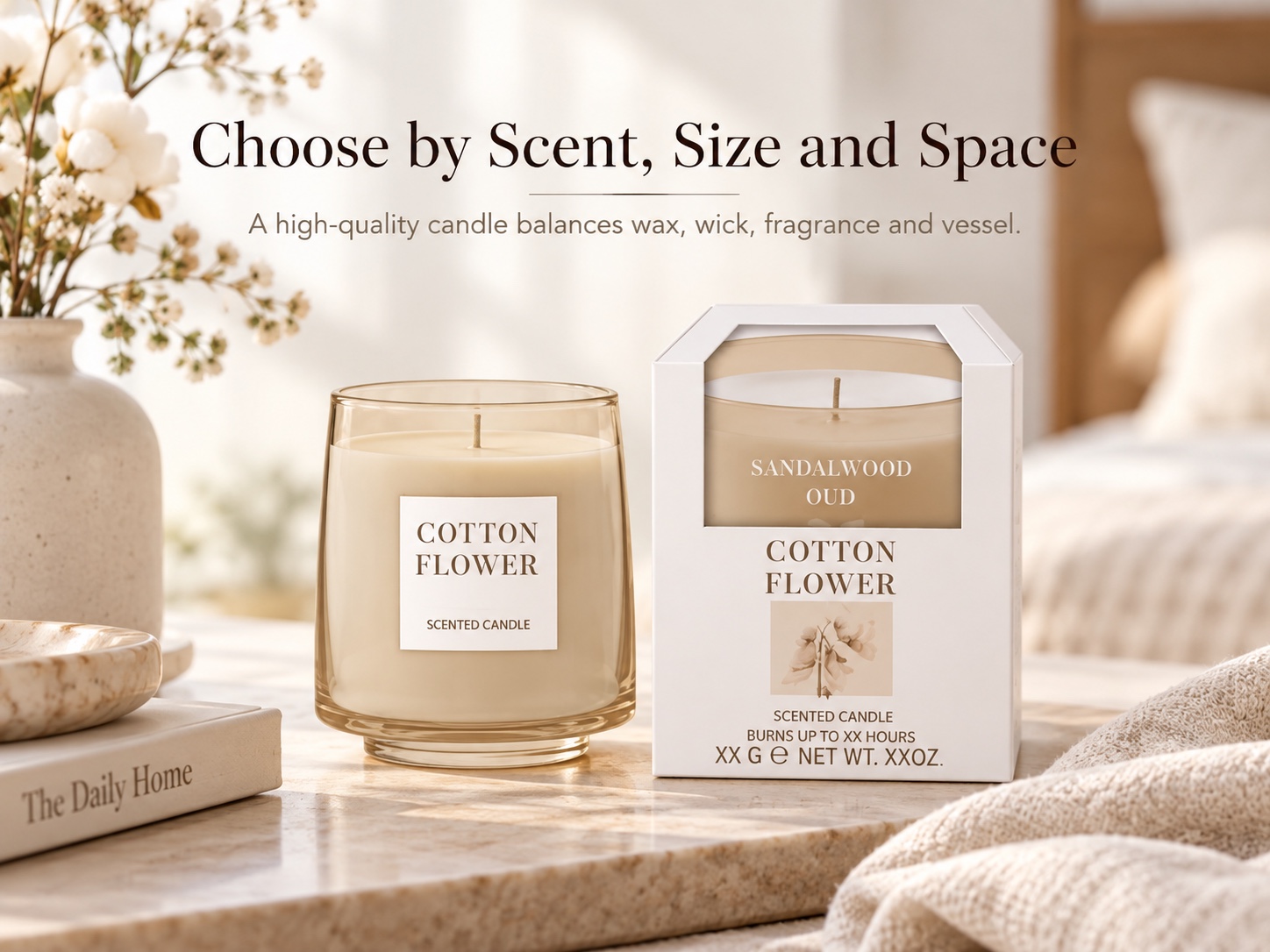
A high-quality scented candle is not simply the candle with the strongest fragrance.
Look for a product with:
- A centered and correctly sized wick
- A clean and well-finished container
- Consistent wax appearance
- A clear fragrance identity
- Stable burn performance
- Consistent product quality between units
For brands and manufacturers, the candle should be evaluated as a complete system: wax + wick + fragrance + vessel.
Frequently Asked Questions
Are scented candles the same as aromatherapy candles?
Not necessarily. “Scented candle” is a broad product category, while “aromatherapy” is often used for candles positioned around essential oils or wellness-related fragrance concepts.
Do scented candles contain essential oils?
Some do, but many use fragrance oils or blended fragrance systems. The final formula depends on the product design and performance requirements.
What is the difference between cold throw and hot throw?
Cold throw is the scent from an unlit candle. Hot throw is the fragrance experienced while the candle is burning.
The Key Takeaway
A Scented Candle Is More Than Wax With Fragrance Added
Its final quality depends on how the wax, wick, fragrance and candle format are designed to work together.
For consumers, that determines the scent experience. For brands, it determines whether a candle can deliver consistent appearance, fragrance and burn performance across an entire product line.