
Once a private label reed diffuser sample is approved, the next challenge is reproducing it consistently in bulk.
Production connects a controlled formula with verified materials, filling, assembly and packing. Each handoff needs a clear specification and a record, so the finished cartons can be traced back to the approved product.
After the formula and component specifications are approved, bulk production moves through a series of connected steps. The team weighs and mixes the liquid, prepares the filling line, assembles each diffuser and packs the finished units, checking the order requirements along the way.
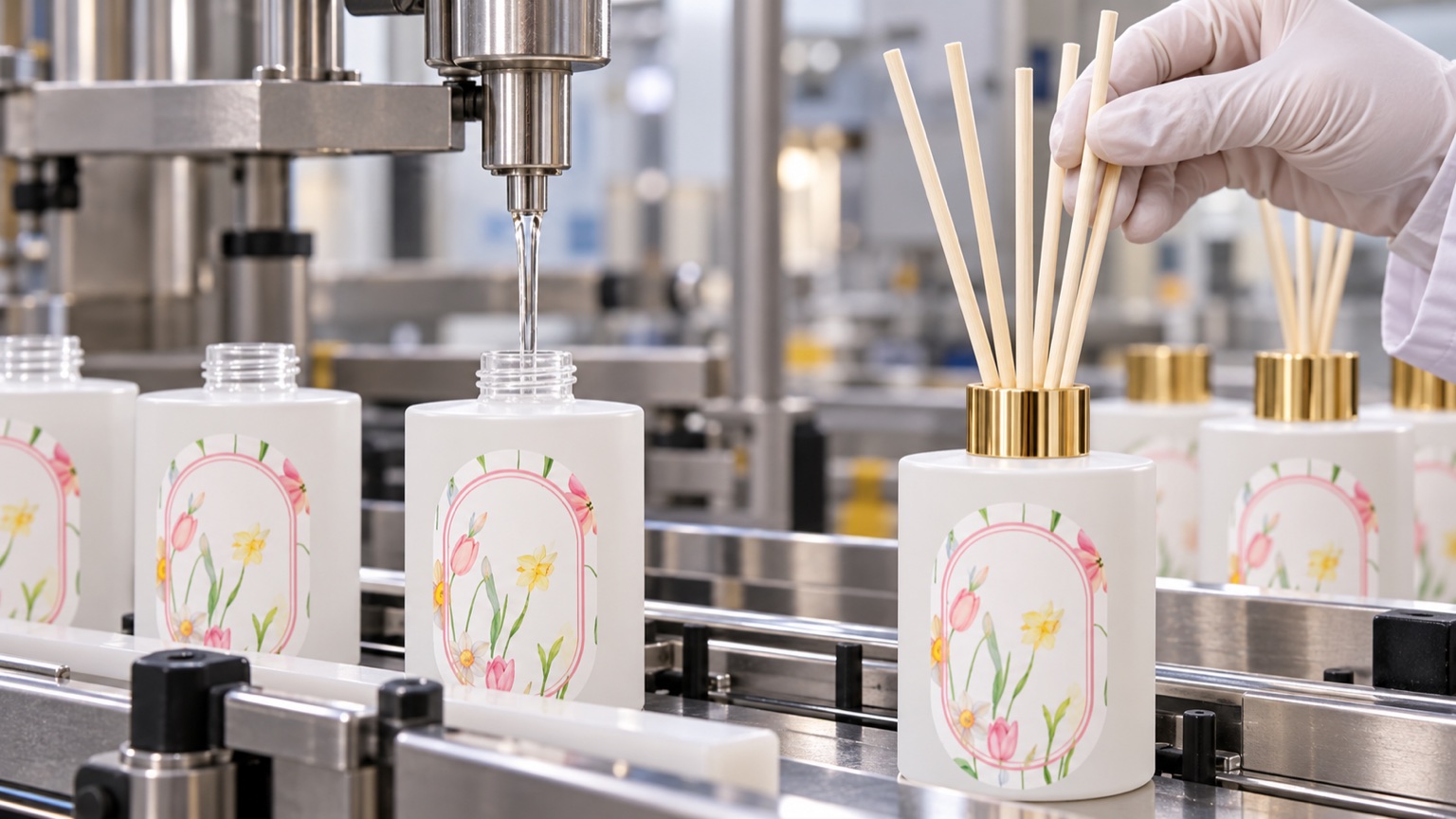
1. Release the Approved Production Specification
Before production begins, the factory needs a current, authorized specification for the order. It should identify the formula code and revision, raw-material codes, target fill quantity, bottle and closure specifications, reed configuration, label and carton artwork versions, and batch identification requirements.
This prevents a common source of avoidable error: a correct product made with an outdated component or artwork file. If a formula, supplier, bottle, closure or packaging item changes after approval, the change should be reviewed before it enters the production run.
2. Verify and Weigh the Materials
The production team checks that each material matches the order and approved formula. This includes confirming material identity, code, lot and status before weighing. Weighing records should connect the planned quantity to the amount actually issued and added to the batch.
The exact checks and approval responsibilities depend on the manufacturer's quality system. For buyers, the practical question is whether the supplier can trace the ingredients in a finished batch back to their source lots and the formula revision used.
3. Mix the Diffuser Liquid to the Approved Process
Operators follow the approved formula, addition sequence and process instructions for that product. The batch record should identify the materials used, their lots, the quantities added and the relevant process checks.
After mixing, the batch is reviewed against the product's approved criteria before it is released for filling. Depending on the specification, checks may include appearance, color, odor and visible uniformity. Mixing time, temperature and waiting period should come from the validated process for the specific formula.
If a batch does not meet its criteria, it should be held for review rather than adjusted informally on the line. Any rework or process change needs authorization and documentation.
4. Prepare and Clear the Filling Line
Before filling, the line is set up for the correct product and cleared of materials or labels from the previous run. Operators verify the bottle, formula, fill target, closure and packaging version against the production order.
A line-clearance check helps prevent mix-ups between similar fragrances or product sizes. It is especially useful when several variants share the same bottle shape or carton format.
5. Fill, Close and Assemble
The approved liquid is filled to the specified target, with in-process checks used to confirm that fill quantity stays within the agreed acceptance range. The filling method and measurement basis should be stated clearly in the production specification.
Bottles then move through the required closure and assembly steps. Depending on the product design, this may include fitting a stopper or insert, applying a cap or collar, attaching a label, and adding the specified reeds. Checks can cover fill appearance, bottle cleanliness, closure fit, label position and component count.
6. Pack and Inspect the Finished Units
Finished units are placed into the approved inner packaging and cartons. Before cases are closed, the packing team verifies that the correct product, label, accessories and quantity are present. Carton markings and order details should match the approved packing instructions.
Final inspection may include checks for visible bottle or decoration defects, leakage or residue, missing components, incorrect artwork and packing quantity. The inspection plan should define the sampling method and acceptance criteria for the order.
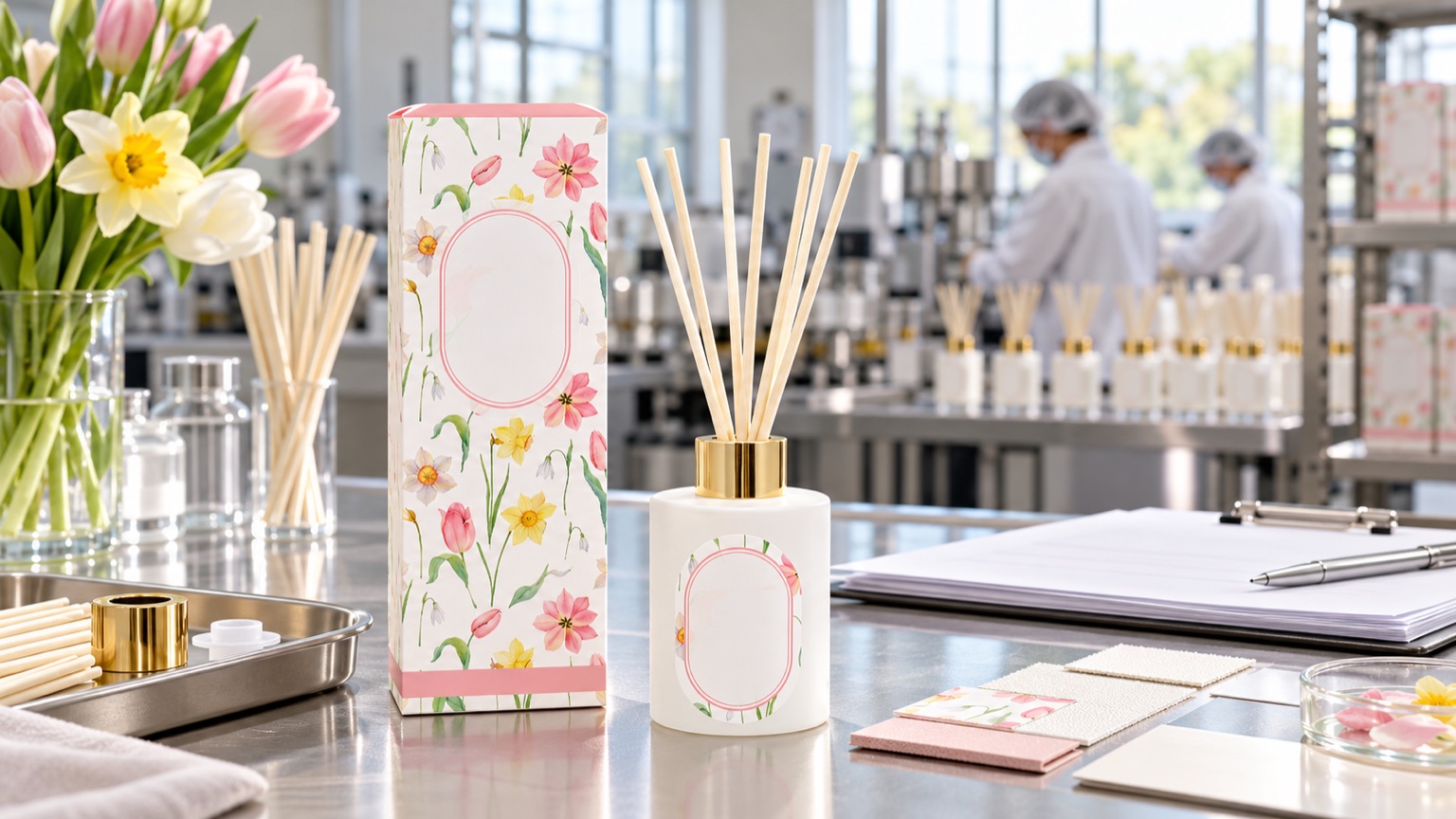
7. Keep Batch Records Connected to the Finished Cartons
Useful production records link the finished goods to:
- formula code and revision;
- raw-material and component lots;
- mixing and filling batch identification;
- in-process and final inspection results;
- label and carton artwork versions;
- quantity produced, packed and released;
- any approved deviation or change.
For buyers, this makes a production claim verifiable. Ask how the factory connects the approved specification to batch records and carton identification, and how it handles a discrepancy discovered during production.
The Final Takeaway
Production Is a Chain of Controlled Handoffs
A reed diffuser order moves through several connected stages: release the approved specification, verify and weigh materials, mix the batch, prepare the line, fill and assemble, pack, and connect the finished cartons to production records.
The sequence is straightforward; consistent execution depends on clear revisions, checks and traceability at each handoff. For a private label project, UNION AURA can coordinate the approved formula, component specifications, filling requirements and packaging details before bulk production.
Explore our reed diffuser collection, review the sample approval checklist, or learn more about our OEM and ODM development process.