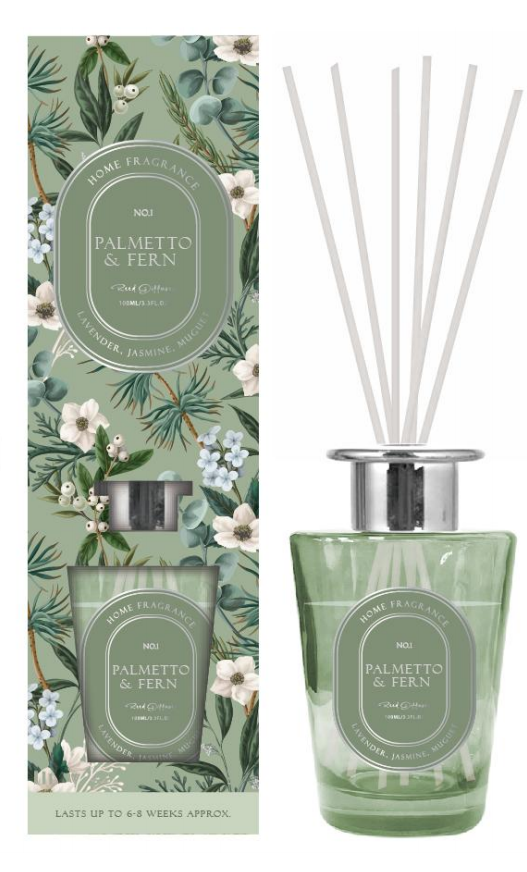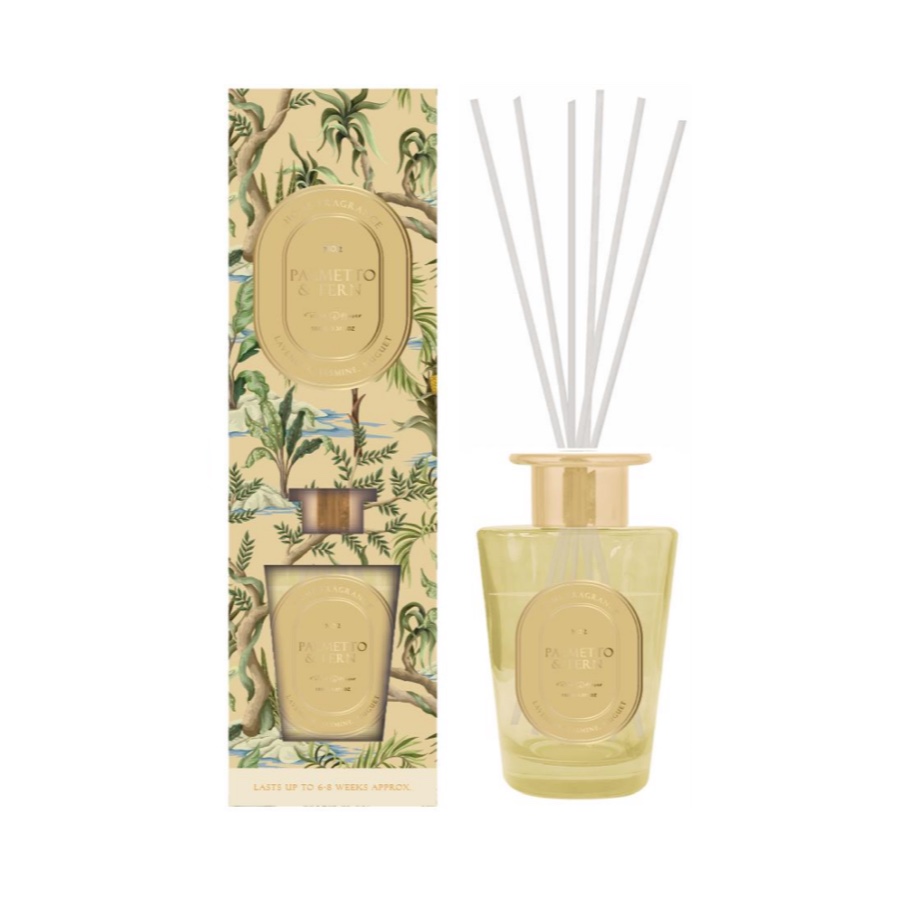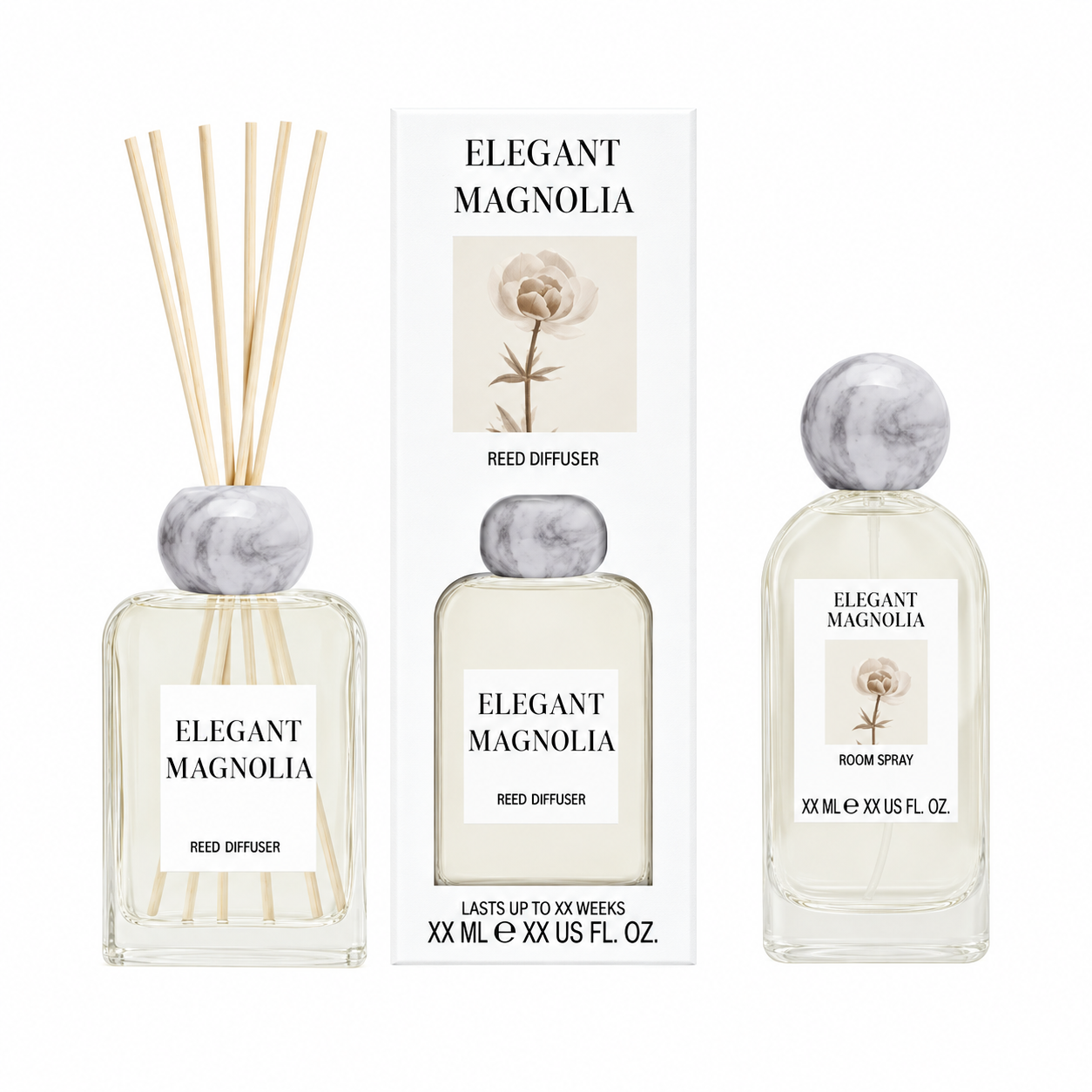
A reed diffuser sample should do more than look attractive. It should confirm exactly what the factory is expected to reproduce in bulk.
Before approving a retail, hospitality or private-label order, review the bottle, fragrance liquid, reeds, closure, decoration, packaging and documents as one complete system. Record the result so the approved sample can become a reliable quality-control reference.
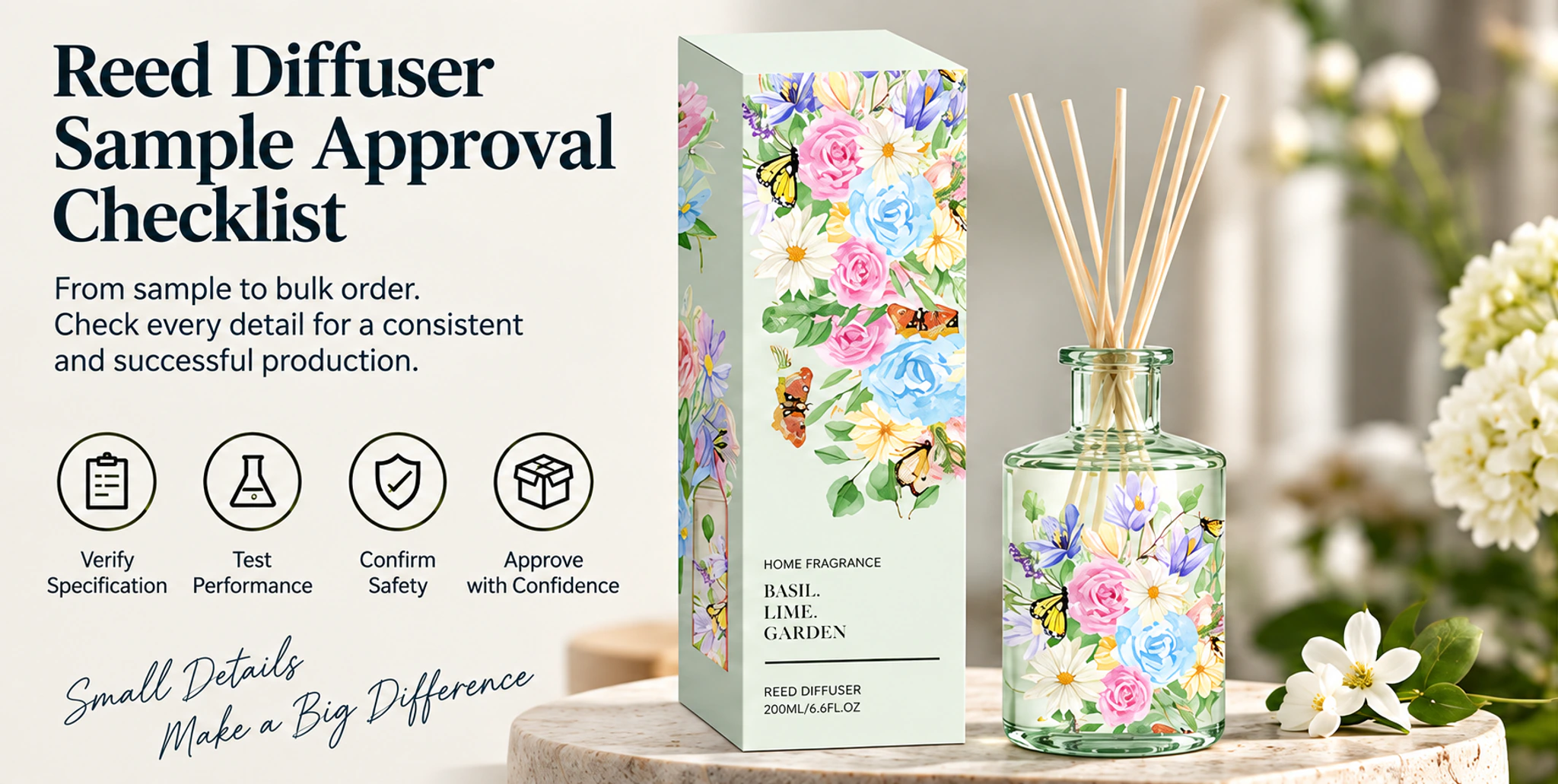
1. Freeze the Product Specification
Start with a written specification that identifies every approved component. At minimum, record:
- Bottle material and capacity
- Target fill weight or volume
- Neck finish and opening
- Fragrance name and formula code
- Liquid color and appearance
- Reed material, length, diameter and count
- Stopper, collar and cap details
- Decoration, label and artwork version
- Inner and outer packaging
- Applicable testing and documents
Use tolerances where appropriate. A description such as “clear glass bottle” is not specific enough to control dimensions, capacity, color or finish during production.
2. Inspect the Bottle and Decoration
Check the physical bottle against the approved drawing or specification. Confirm its dimensions, weight, capacity, neck geometry, base stability and visible quality.
Review printing, coating, labels and decorative finishes under consistent lighting. Confirm logo position, color, registration, adhesion and resistance to normal handling. Also check that decoration remains acceptable after contact with the finished fragrance formula.
Approval point:
The sample should match the signed artwork and the physical appearance standard that will be used during inspection.
3. Confirm Fragrance-Liquid Stability
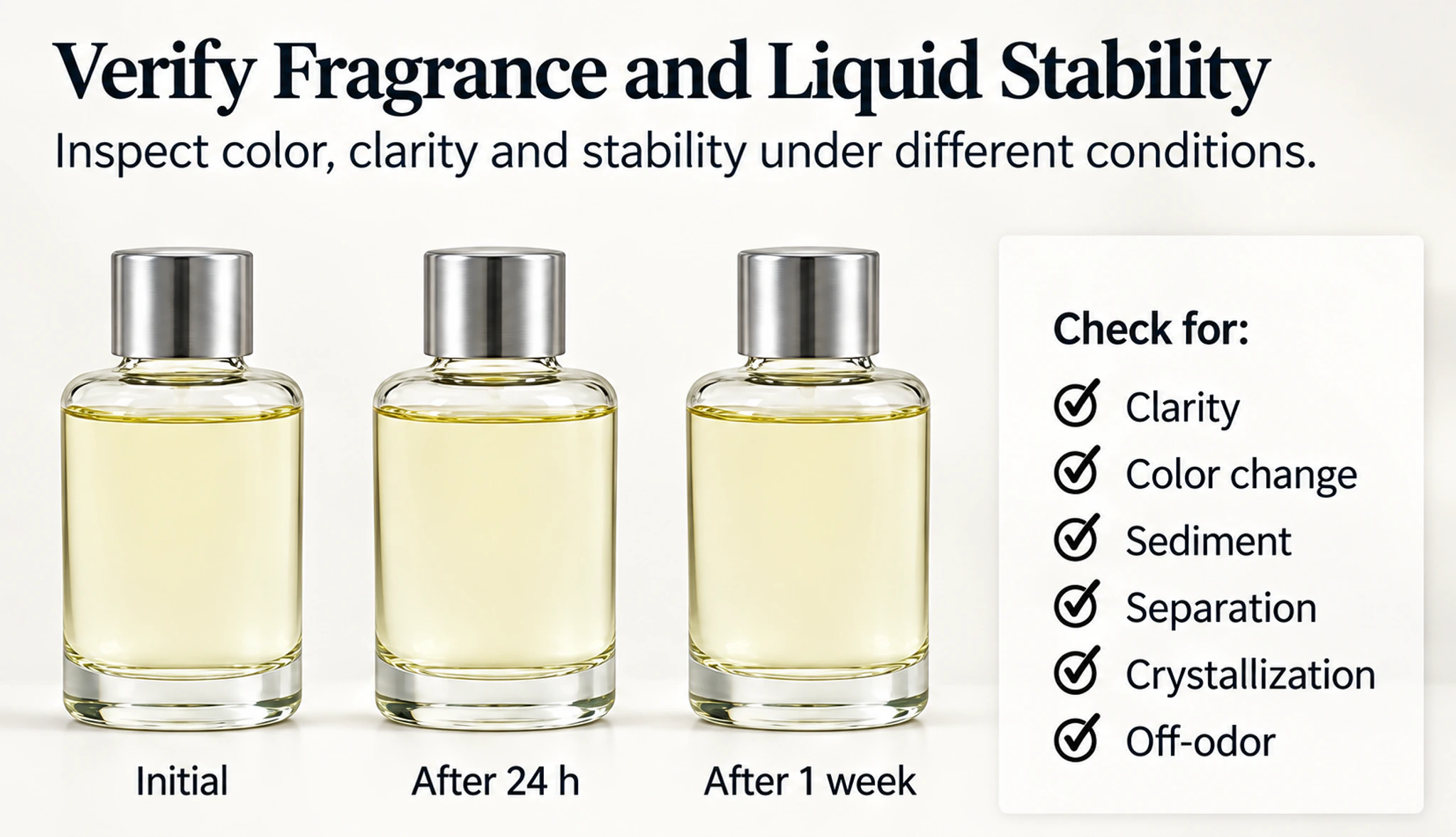
Evaluate the actual production formula in the intended bottle. Record the liquid color, clarity, odor and fill level at the start of testing, then compare them at planned intervals.
Look for haze, sediment, separation, unexpected color change, bottle or decoration damage and changes to closure materials. Stability conclusions should be based on defined test conditions and the target shelf-life plan, not on a short visual check alone.
4. Test Diffusion Under Controlled Conditions
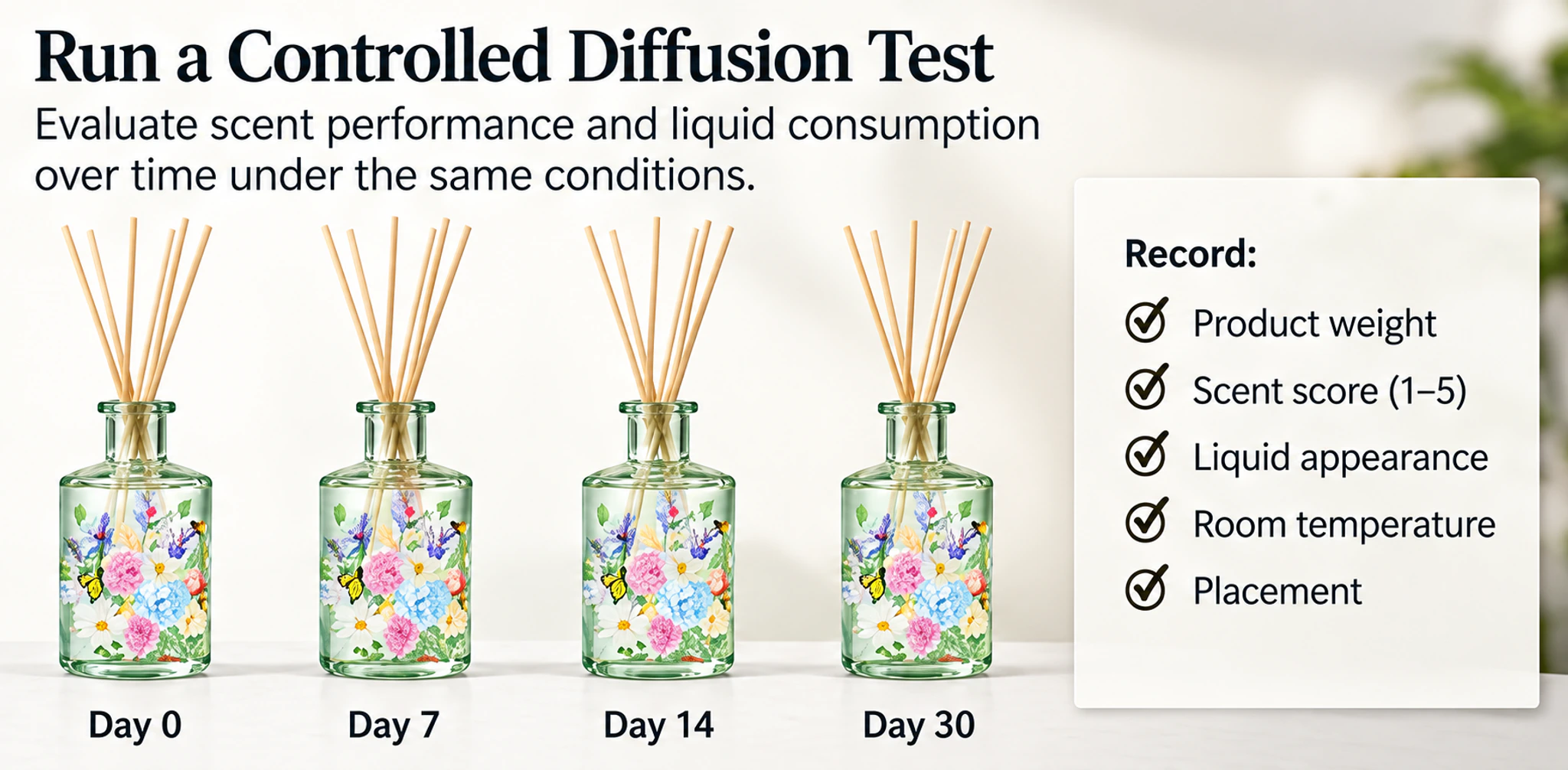
Use the production-equivalent bottle, formula and reeds. Keep room conditions and placement consistent, then record the test rather than relying on memory.
Day 0 → Day 7 → Day 14 → Day 30
At each checkpoint, record liquid weight, scent evaluation, reed condition and any visible change. Note room temperature, relative humidity, reed-flipping practice and the evaluation distance. This makes sample comparisons useful when a component or formula changes.
5. Check Reeds, Closure and Packaging Together
Confirm that the reeds fit the bottle opening and deliver the intended appearance and performance. Test the stopper, plug, collar and cap for fit, removal and resealing where applicable.
Leakage testing should use the finished fragrance formula. Review upright, side and inverted orientations according to the agreed test plan, then inspect labels, coatings, inserts and cartons for staining or damage.
Pack the approved product exactly as it will ship. Confirm insert fit, barcode readability, warning text, carton quantity, protective separation and final carton markings.
6. Approve Labels and Required Documents
Match labels and documents to the exact formula, capacity, package and destination market. Depending on the project, this may include an SDS, ingredient or allergen information, transport classification, test reports, warning statements and batch-identification requirements.
A document for a different fragrance, bottle size or package is not automatically valid for the sample being approved.
7. Sign and Retain a Golden Sample
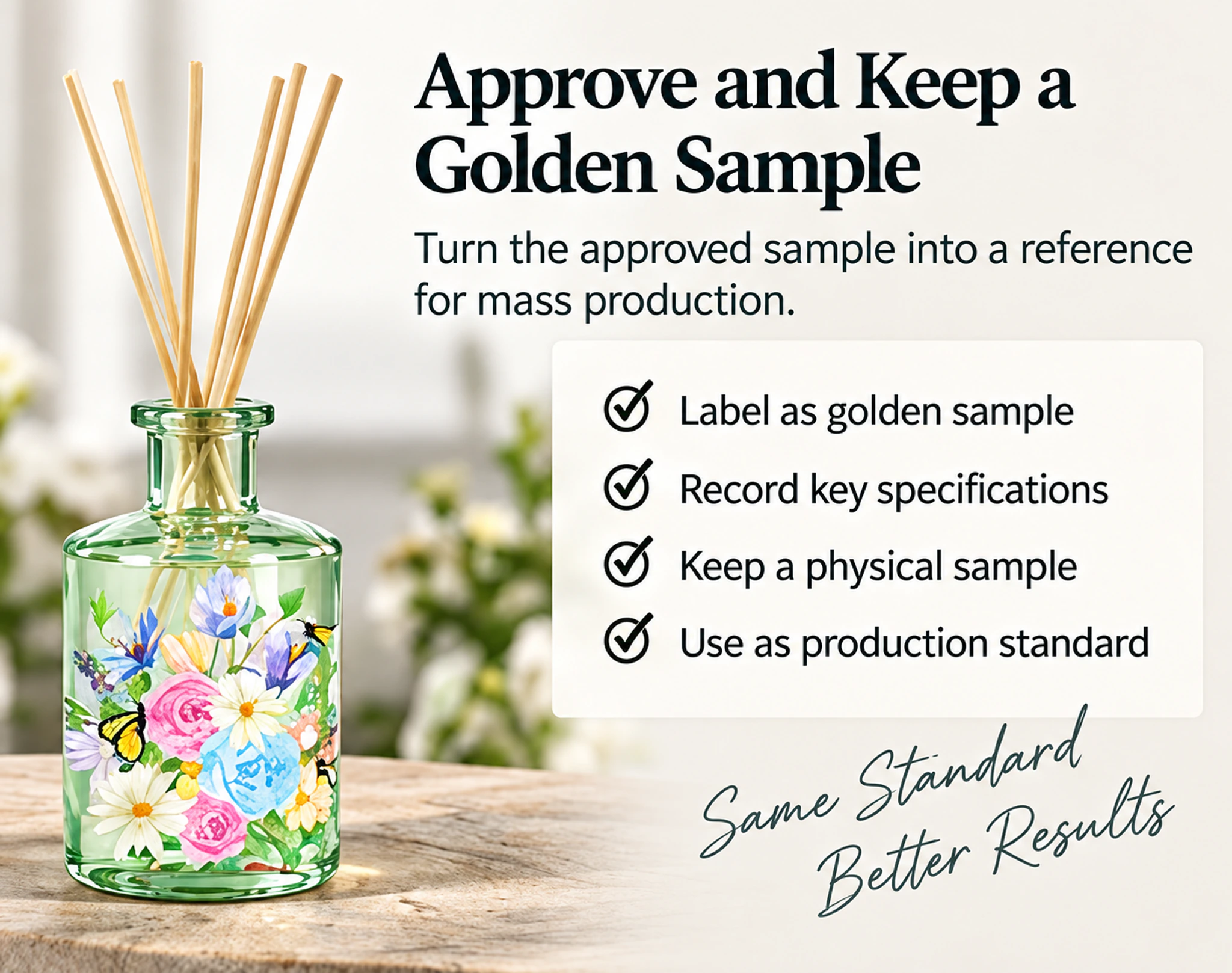
Once all checks are complete, approve a production-equivalent sample and record its version, date and sign-off status. The buyer and manufacturer should retain matching references where practical.
The golden sample should connect the final artwork, bill of materials, formula, component specifications, packaging and inspection criteria. If any approved component changes, document the change and decide whether a new sample is required.
Final Reed Diffuser Sample Approval Checklist
| Approval Area | Confirm Before Bulk Production |
|---|---|
| Specification | Final component list, dimensions, tolerances and artwork version recorded |
| Bottle | Capacity, dimensions, finish, stability and visible quality approved |
| Formula | Fragrance, color, clarity and compatibility approved |
| Performance | Diffusion and consumption test conditions and results recorded |
| Reeds & closure | Material, dimensions, count, fit and sealing system approved |
| Packaging | Leakage, insert, label, barcode and transit configuration checked |
| Documents | Product- and market-specific documents confirmed |
| Golden sample | Production-equivalent sample signed, dated and retained |
The Key Takeaway
Make the Sample a Measurable Production Standard
Sample approval is the point where the product brief becomes a controlled physical reference.
Specification → Bottle → Formula → Diffusion → Closure → Packaging → Documents → Golden Sample
Clear records reduce ambiguity for purchasing, production and inspection teams and provide a stronger basis for consistent bulk orders.