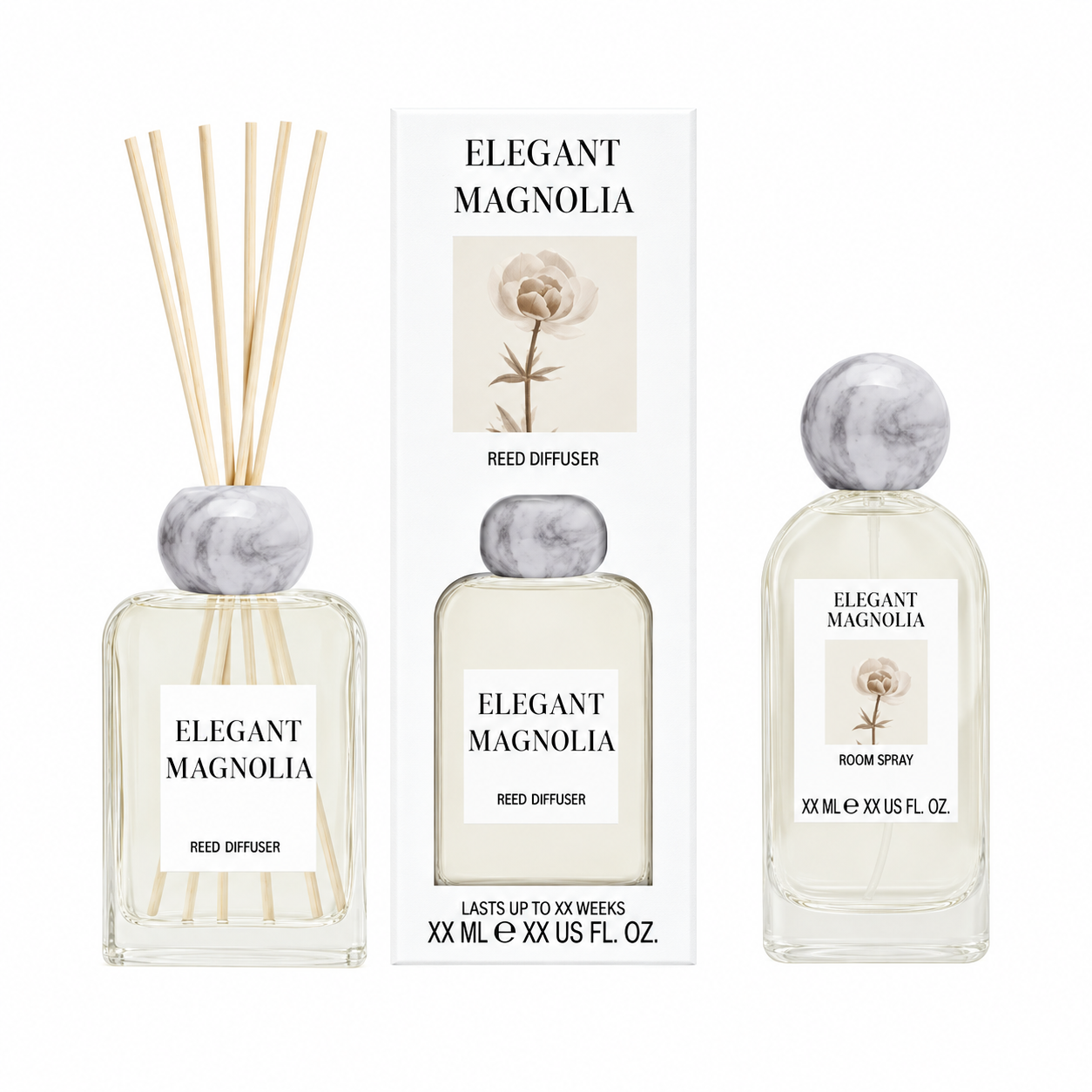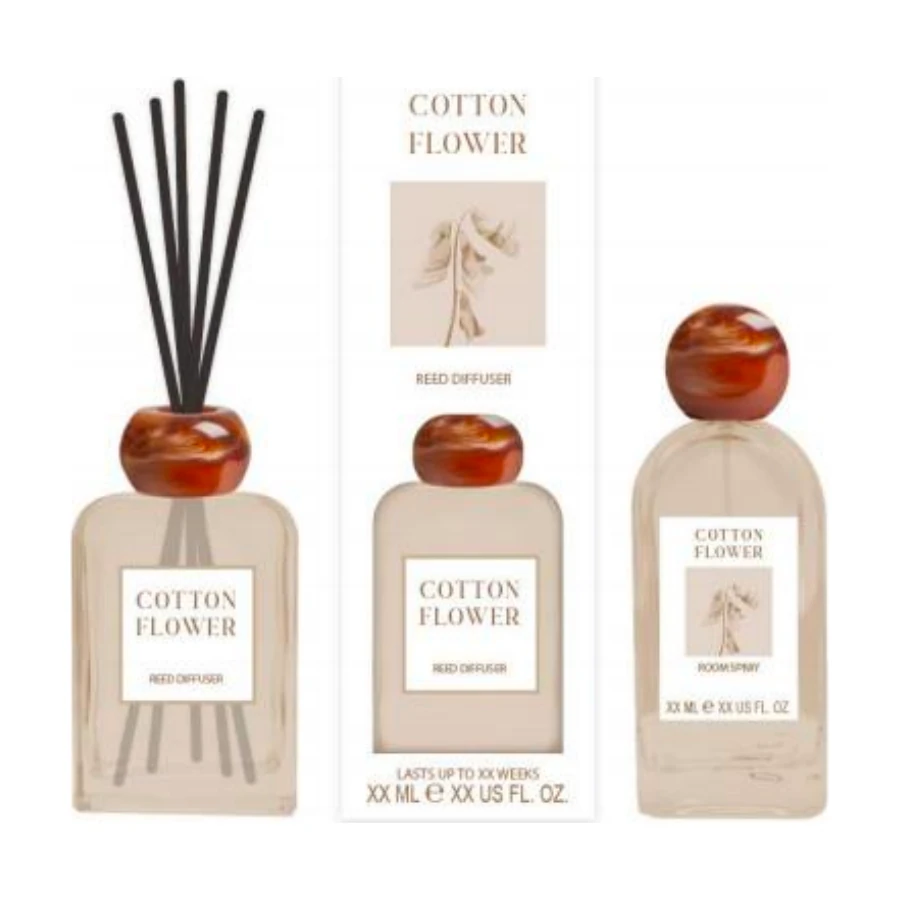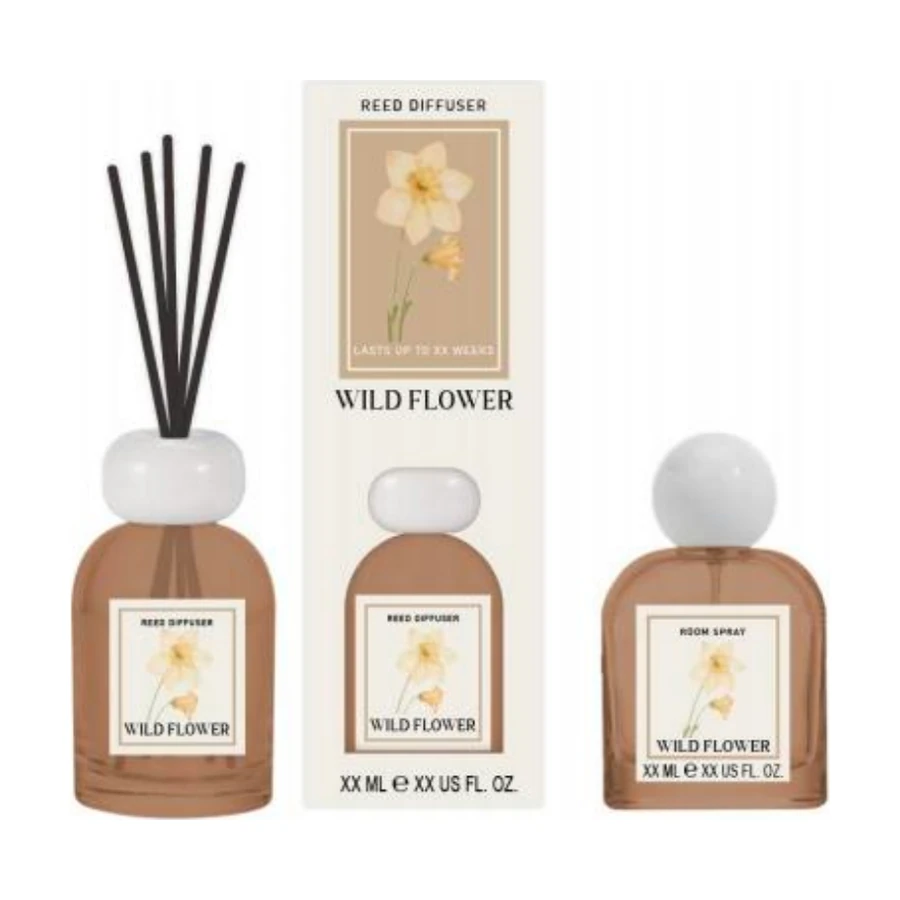
If you want continuous fragrance without open flames, a reed diffuser is one of the simplest home fragrance products to use.
But what is a reed diffuser, how do reed diffusers work, and why does one diffuser produce a stronger scent than another?
A typical reed diffuser set contains a diffuser bottle, scented fragrance liquid, and several diffuser reeds. The reeds absorb the liquid and gradually release fragrance into the surrounding air.
The result is a low-maintenance way to make a room or small space smell more pleasant throughout the day.
What Is a Reed Diffuser?
A reed diffuser is a passive air freshener and home fragrance system that does not require heat or electricity.
Most designs use a glass bottle filled with scented oil and a group of porous reeds. The lower part of each reed sits inside the liquid while the upper section remains exposed to the air.
The diffuser can contain fragrance oil, essential-oil-based blends, or another diffuser-compatible fragrance formula.
However, pure essential oil is not automatically suitable for a reed diffuser. Essential oils may need to be blended with a compatible diffuser base so the liquid can travel efficiently through the reeds.
Some modern formulations are also marketed as alcohol-free reed diffuser liquids. These use alternative carriers rather than alcohol to control evaporation, fragrance diffusion, and formula stability.
How Do Reed Diffusers Work?
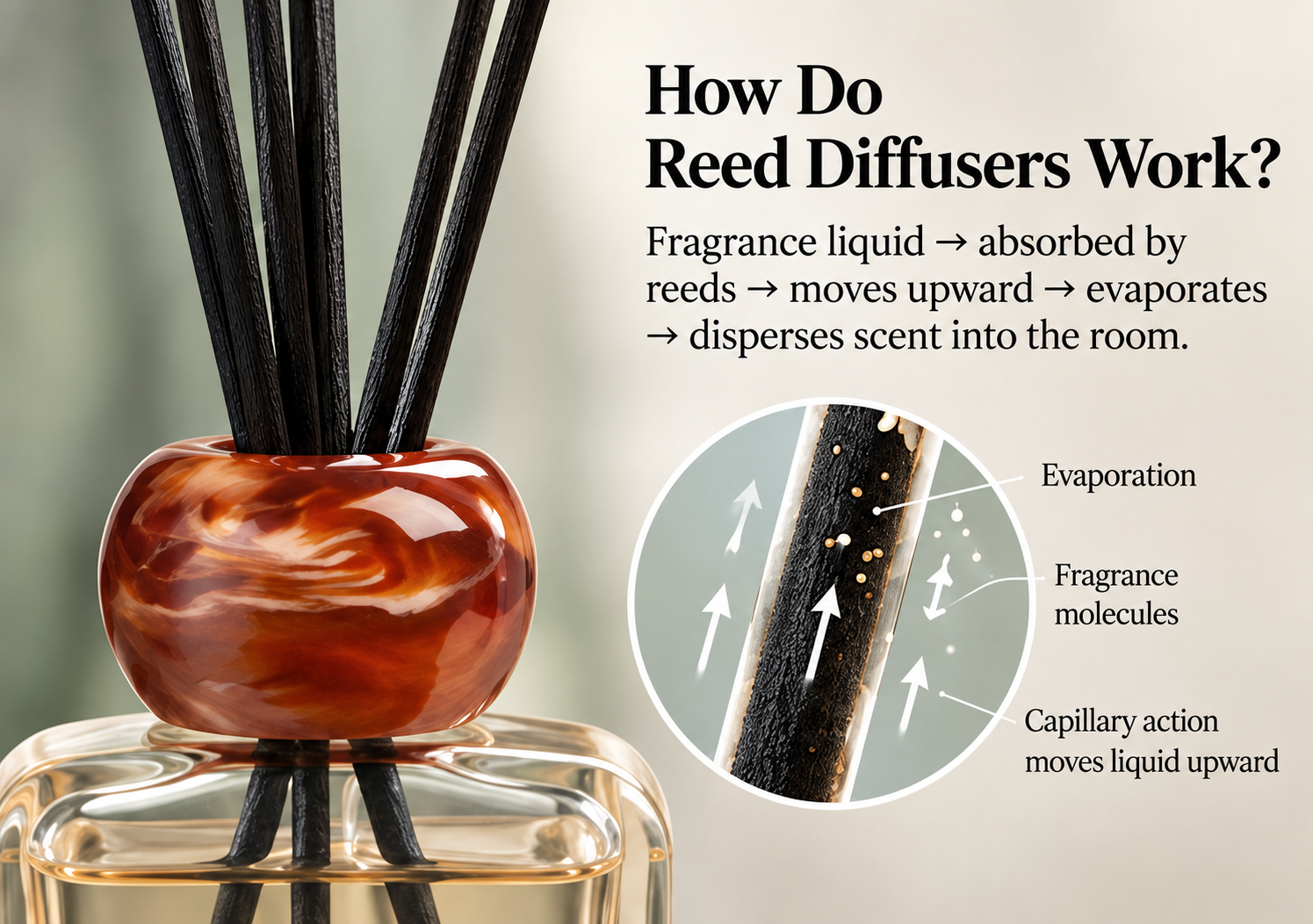
A reed diffuser works through two main processes: capillary action and evaporation.
The process is simple:
Fragrance liquid → absorbed by the reeds → moves upward → evaporates from the exposed reeds → disperses scent into the room
The porous structure of the reeds allows the liquid to move upward without a pump.
Once the scented oil reaches the exposed part of the reeds, volatile fragrance molecules evaporate into the surrounding air.
A 2024 study published in Cell Reports Physical Science tested reed diffuser emissions in a full-scale environmental chamber. The researchers found that temperature and diffuser placement significantly affected the release and indoor distribution of fragrance-related VOCs.
At 25°C, linalool acetate represented 31.4%–43.6% of the measured total VOCs from the tested diffuser.
This helps explain why the same diffuser may perform differently in different rooms.
How to Use a Reed Diffuser Properly
Knowing how to use a reed diffuser properly improves both scent performance and product life.
Start by placing the diffuser bottle on a stable surface.
Remove the transport stopper, insert the reeds into the fragrance liquid, and allow them to begin absorbing the formula.
Do not place the diffuser directly beside heat sources, strong air-conditioning outlets, or direct sunlight.
Moderate airflow helps disperse scent, but excessive airflow can increase evaporation.
For this reason, the best position is usually somewhere with gentle air movement rather than an extremely still corner or directly beside a fan.
Should You Flip the Reeds?
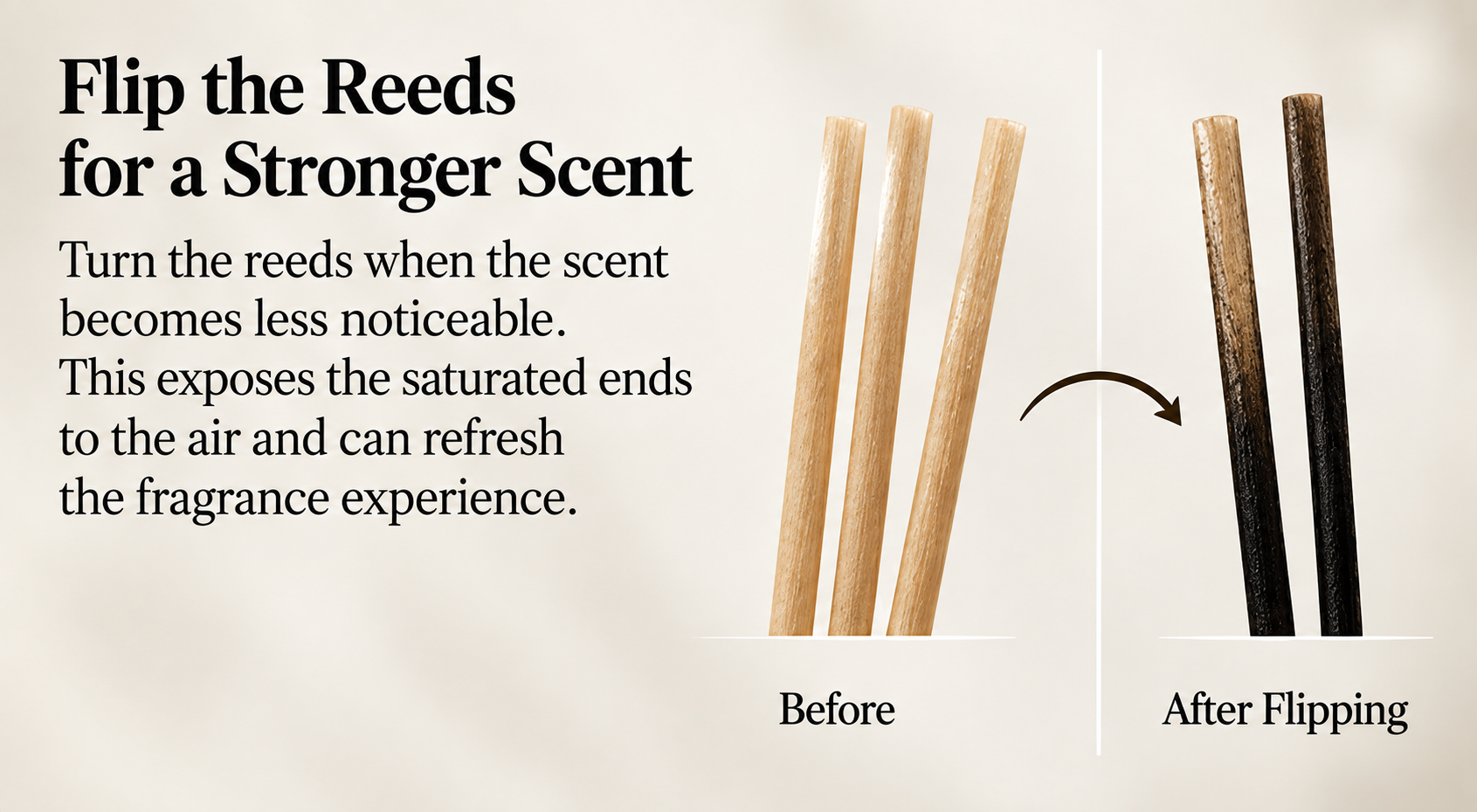
Yes, you can flip the reeds when the scent becomes less noticeable.
Turning the reeds exposes the saturated ends directly to the air and can temporarily create a stronger scent.
However, frequent flipping also increases evaporation.
If you flip the reeds every day, the diffuser liquid will be consumed more quickly.
Instead, treat flipping as a way to refresh the fragrance experience, not as a daily requirement.
Do More Diffuser Reeds Create a Stronger Scent?
Increasing the number of reeds increases the total surface area available for evaporation.
That usually means:
More reeds → more evaporation surface → stronger scent → faster liquid consumption
This is especially relevant in high traffic areas, where air movement and larger room volume may require more fragrance output.
By contrast, fewer reeds may be more appropriate for bedrooms, bathrooms, entryways, and other small spaces.
There is no universal reed number that works for every diffuser because reed diameter, bottle opening, fragrance viscosity, and fragrance composition all affect performance.
As a development reference, some diffuser formulation guides use 8–10 reeds for a 100 mL diffuser, but this should be treated as a starting point rather than a universal rule.
How Long Do Reed Diffusers Last?
People often ask how long do reed diffusers last, but bottle size alone cannot answer that question.
The main factors are:
- Number of diffuser reeds
- Bottle opening diameter
- Fragrance formula
- Room temperature
- Airflow
- Reed material
- Frequency of reed flipping
A diffuser with more reeds can smell stronger but may use the fragrance liquid faster.
A diffuser placed in a warm or windy location may also evaporate faster than the same product placed in a cooler, stable environment.
This is why two 100 mL home fragrance diffusers can have very different service lives.
Reed Diffuser Oil, Fragrance Oil, or Essential Oil?
These terms are often confused.
Reed diffuser oil usually refers to the complete liquid formula placed inside a diffuser.
Fragrance oil is the aromatic component used to create a specific scent.
Essential oil is derived from botanical materials and may be used as part of a diffuser formula, but it still needs to work with the carrier system and reeds.
For consistent performance, a high quality reed diffuser formula should balance fragrance intensity, viscosity, evaporation rate, and reed compatibility.
Simply increasing the percentage of fragrance oil does not guarantee a better or stronger scent.
If a formula becomes too difficult for the reeds to transport, scent performance can actually decrease.
Reed Diffusers vs Candles
Both candles and reed diffusers are popular home fragrance products, but they create very different experiences.
Candles provide fragrance while burning and also create visible flame and atmosphere.
Reed diffusers provide continuous fragrance without open flames, making them especially practical for bedrooms, bathrooms, offices, hallways, and spaces where a flame is not desired.
Many people use both products together—candles for mood and reed diffusers for continuous background scent.
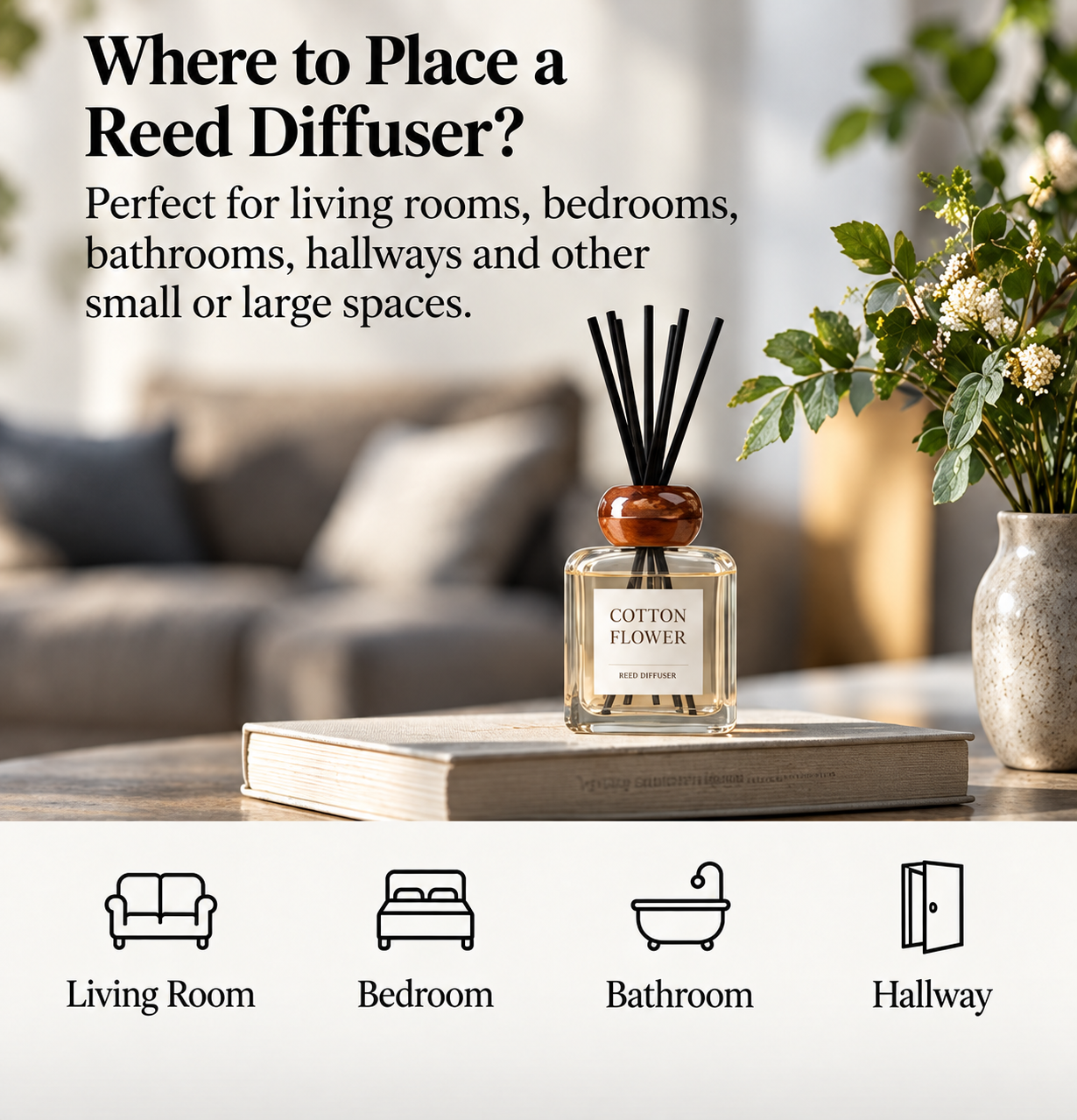
Where Should You Place a Reed Diffuser?
Placement can have a noticeable impact on performance.
For small spaces, such as bathrooms or guest rooms, a compact diffuser with controlled scent output may be enough.
For larger living areas or high traffic areas, a larger diffuser, more reeds, or multiple fragrance points may provide a more noticeable result.
Avoid:
- Direct sunlight
- Radiators
- Strong HVAC airflow
- Open windows with constant drafts
A well-positioned diffuser should provide enough airflow to disperse scent without accelerating evaporation excessively.
Practical Summary
How to Get the Best Fragrance Experience
The best reed diffuser is not necessarily the one with the most reeds or the highest fragrance concentration.
A high quality diffuser should balance:
reed performance + fragrance formula + bottle design + room conditions
Choose a favorite fragrance that suits the space, use the correct number of reeds, and adjust placement before repeatedly adding reeds or flipping them.
Whether you prefer fresh citrus, woody notes, florals, or luxury reed diffusers with more complex fragrance profiles, the same principle applies:
A reed diffuser performs best when the bottle, fragrance liquid, reeds, and environment work together as one system.
References
Zhang, X. et al. (2024). Emissions of volatile organic compounds from reed diffusers in indoor environments. Cell Reports Physical Science, 5(8), 102142.
CandleScience. How to Make Reed Diffusers.
Wickii. Diffuser Reeds: The Complete Guide to Choosing Reeds, Base & Fragrance Load.