Creating custom reed diffusers involves more than placing a logo on a bottle. For retailers, fragrance brands and hospitality buyers, the process connects artwork, bottle decoration, fragrance, diffuser reeds, labels and packaging into one production-ready specification.
A design that looks perfect on screen may behave differently when printed on textured paper, screen-printed onto a glass bottle, or applied to a small curved label.
That is why artwork approval is one of the most important stages between concept and mass production. Here is how a custom reed diffuser moves from artwork approval to finished packaging.
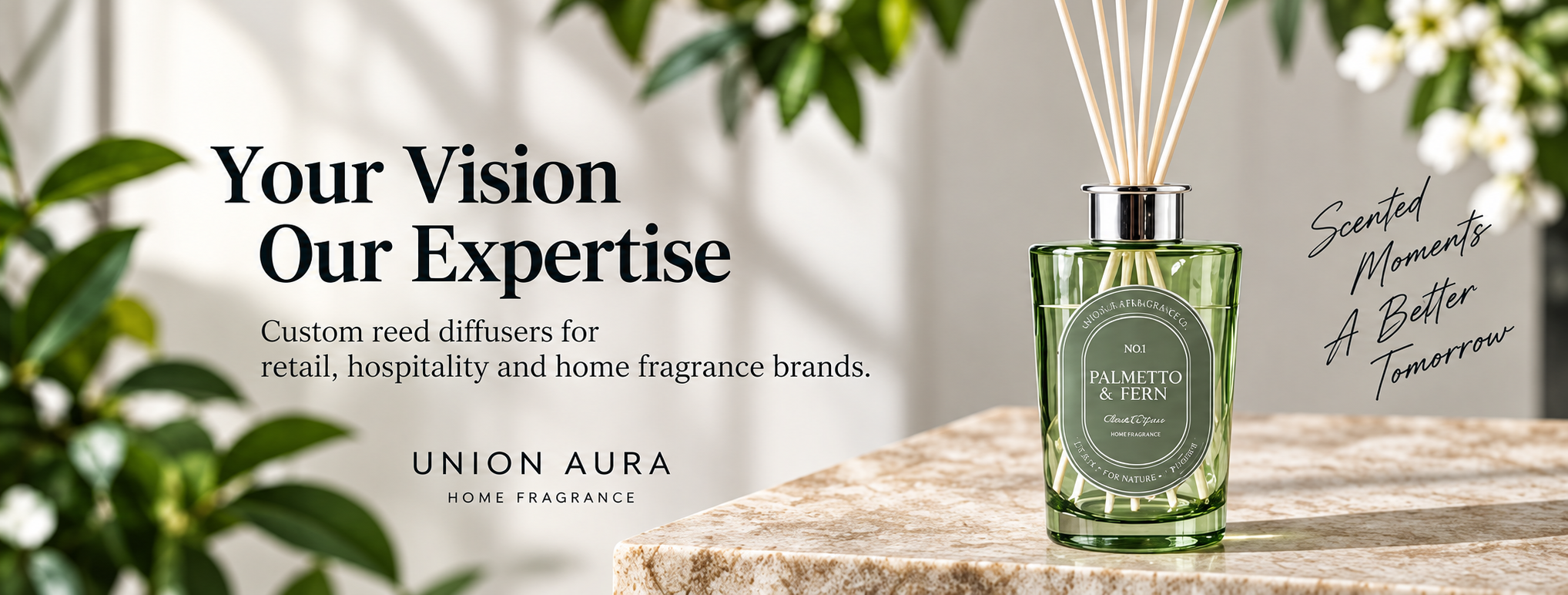
1. Start With Production-Ready Artwork
Before sampling begins, the manufacturer needs artwork that can be converted into a production file.
For most private label reed diffusers, this includes:
- Brand logo
- Product or fragrance name
- Bottle label artwork
- Outer-box artwork
- Required product information
- Barcode
- Print colors and finishing instructions
Vector files such as AI, EPS or editable PDF are preferred for logos and line artwork because they can be scaled without losing resolution. Raster images should normally be supplied at 300 dpi at final print size.
Color specification also matters. A screen color is not a reliable print reference, so critical brand colors should be identified using Pantone (PMS) or agreed physical color standards where the selected printing process allows it.
For buyers, this is the first checkpoint.
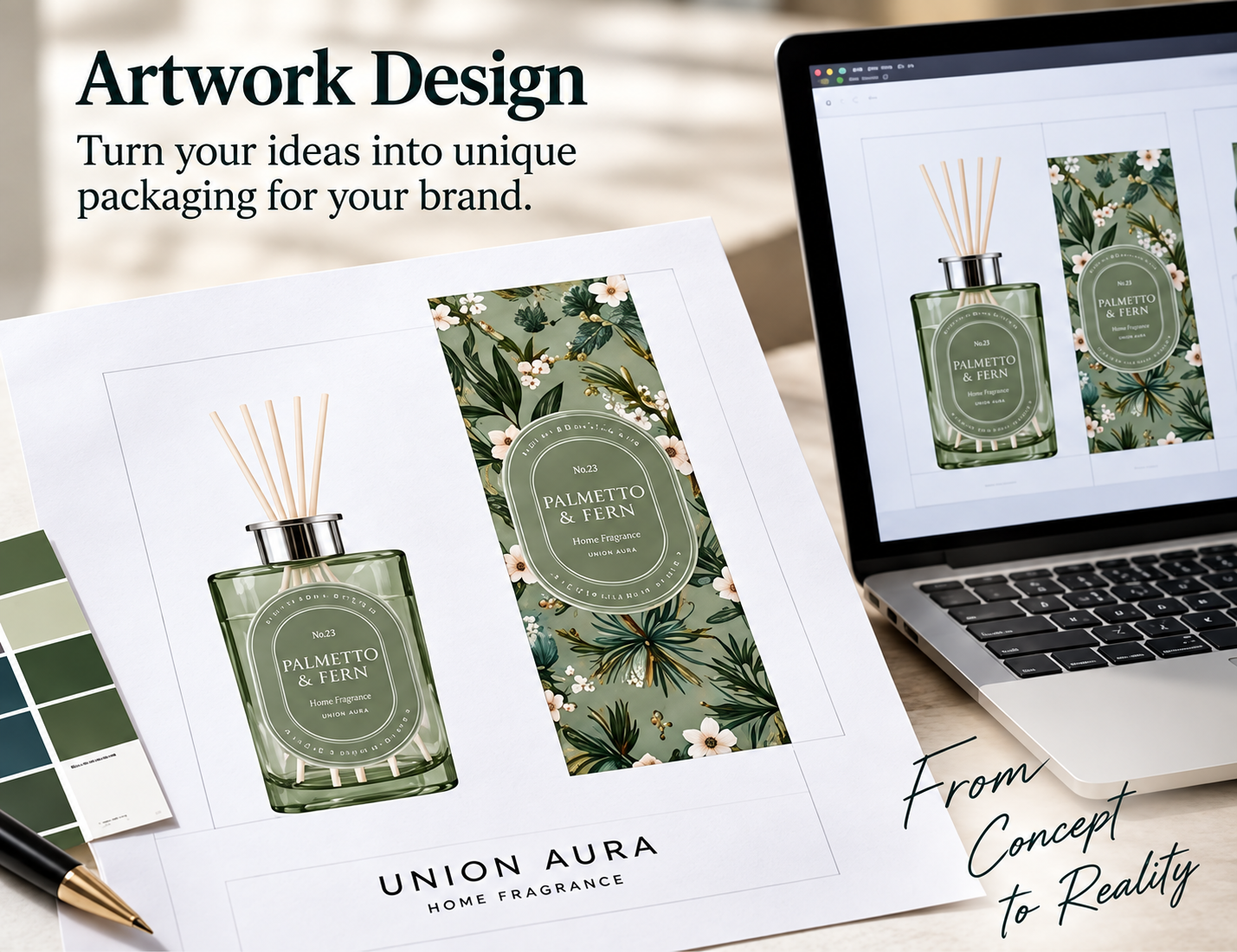
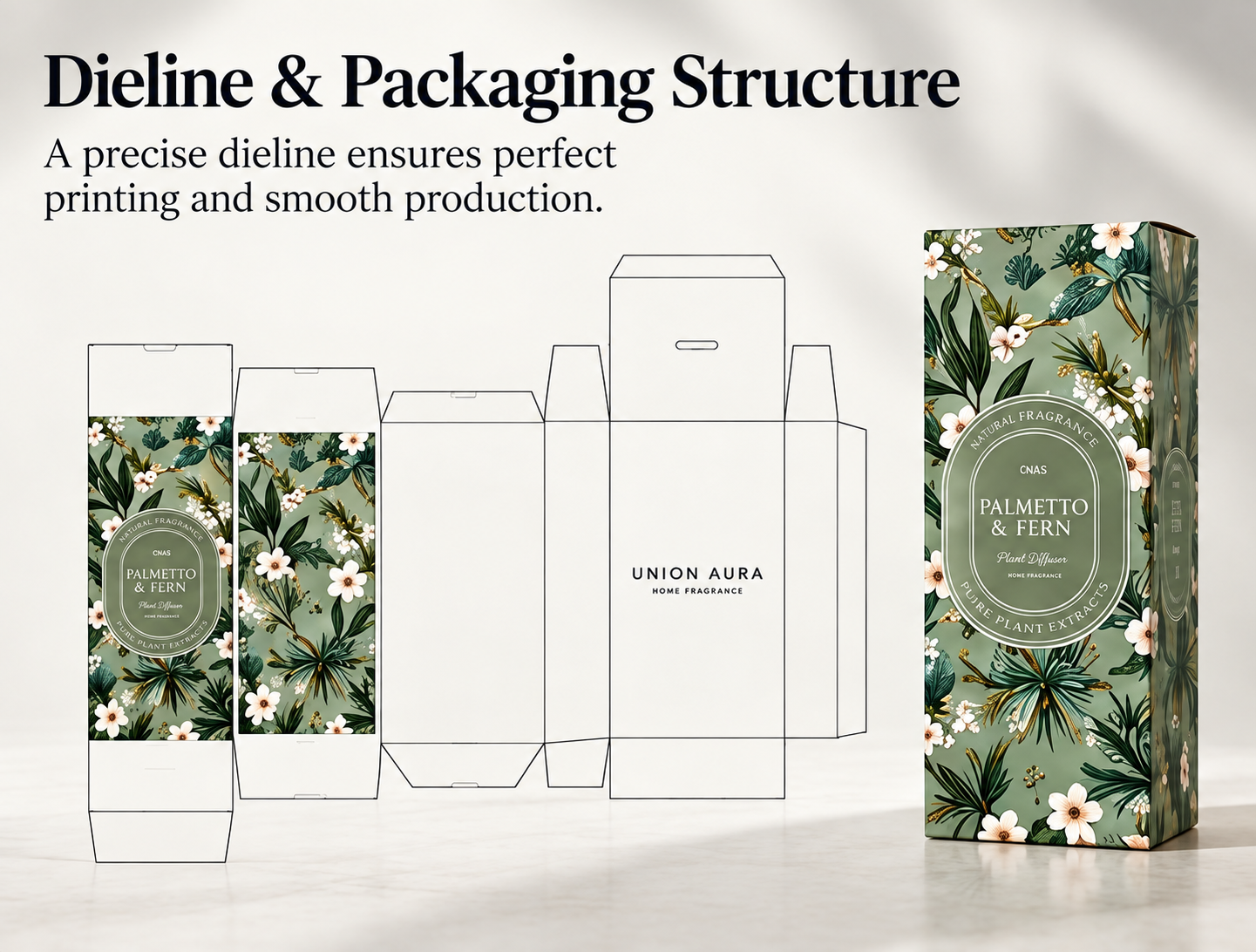
2. Create the Artwork Dieline
The next step is adapting the artwork to the physical product.
A reed diffuser bottle and folding carton have different printable areas. The supplier therefore creates or provides a dieline showing where graphics, text, folds, cuts and other production elements will appear.
Packaging artwork commonly needs to account for bleed beyond the final cut line. Adobe recommends a standard 0.125 in / 3 mm bleed for many print documents, although the printer's own dieline specification should always take priority.
Bottle: label size, printable area, logo position and viewing direction.
Box: front/back panels, side panels, top/bottom flaps, folds, cut lines and barcode position.
3. Choose How the Branding Goes on the Bottle
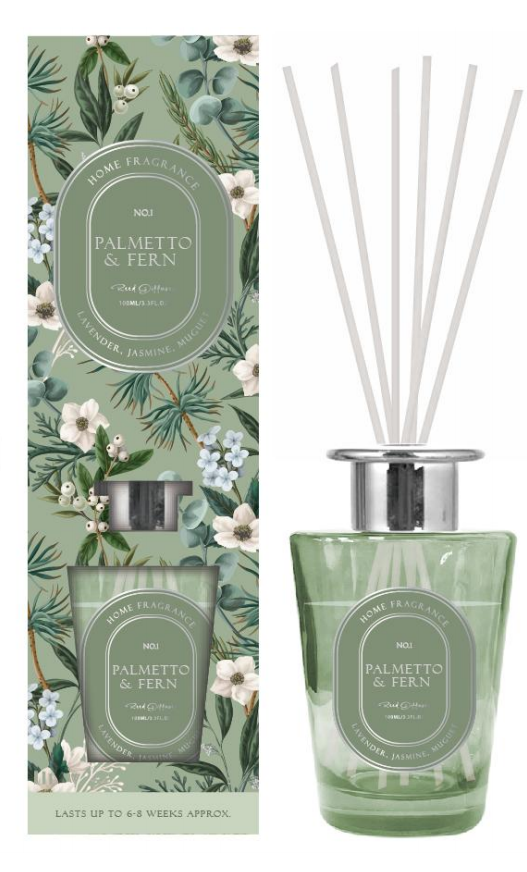
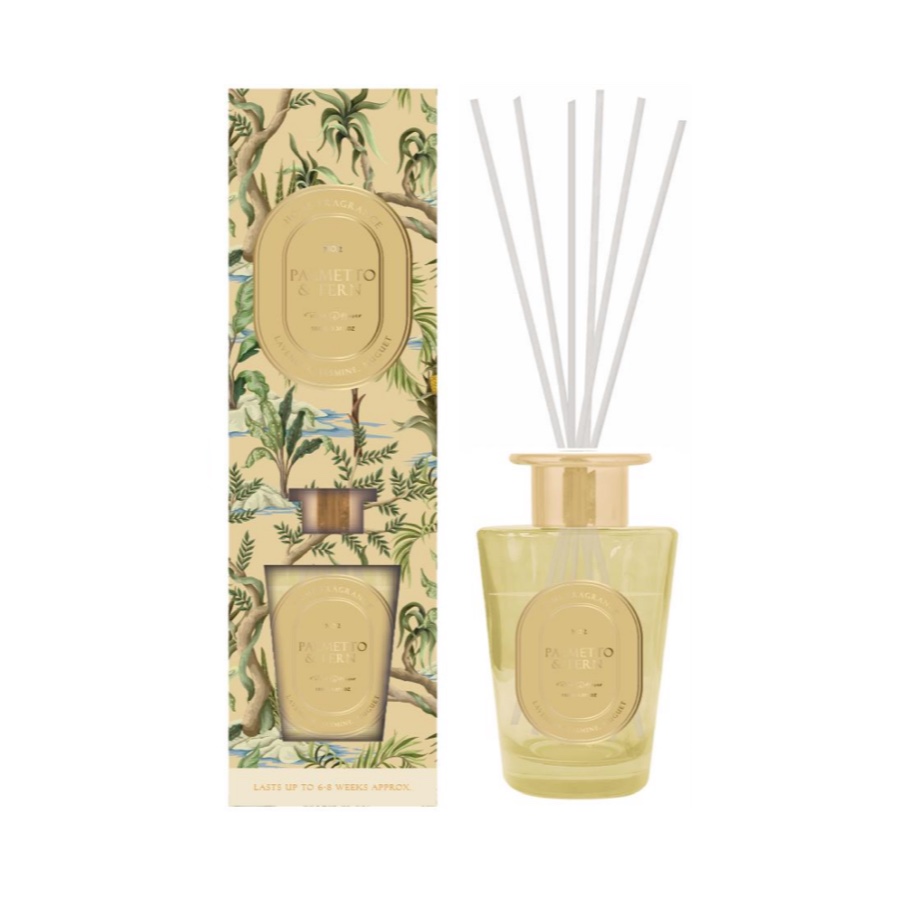
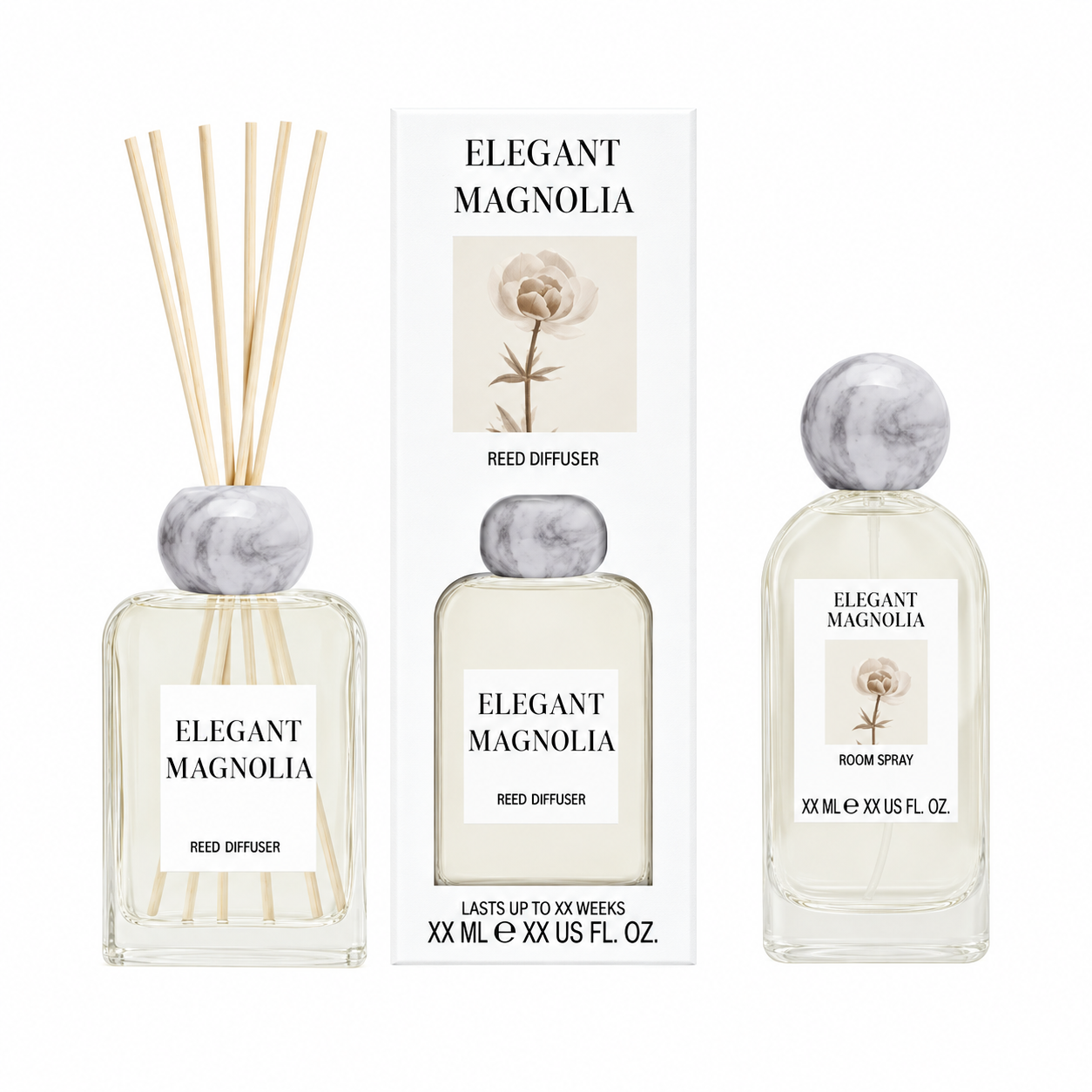
The same custom reed diffuser can look very different depending on the decoration method.
| Decoration | Best Used For | Key Characteristic |
|---|---|---|
| Adhesive label | Flexible private-label projects | Easy artwork changes |
| Screen printing | Minimal premium branding | Printed directly on glass |
| Hot stamping | Premium details | Metallic visual effect |
| Coating / spraying | Custom bottle color | Changes overall appearance |
| Decal / transfer | Detailed decoration | More complex graphics |
A label provides flexibility, while direct decoration can create a more integrated premium appearance.
For luxury reed diffusers, buyers often combine bottle decoration with textured paper, foil, embossing or other finishes on the outer carton. But every additional process introduces another production variable. A more complex package should therefore be sampled before bulk approval.
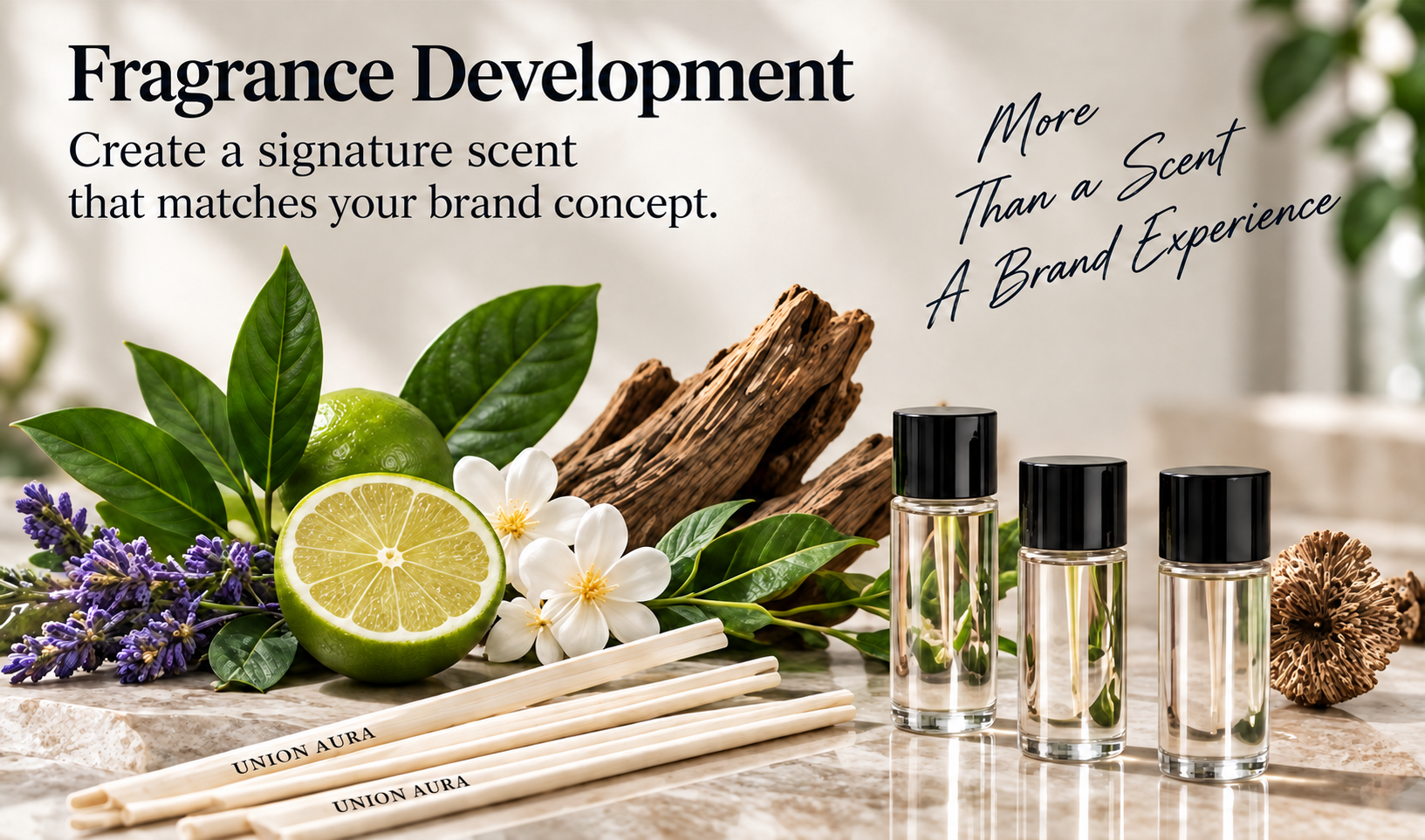
4. Match the Fragrance to the Brand Concept
Artwork and fragrance should be developed as parts of the same product story.
For example, a collection positioned around botanical freshness may combine muted green packaging with citrus, herbal or woody fragrance directions, while a hotel collection may prioritize a more consistent signature scent across rooms and public areas.
When developing a custom fragrance, buyers should approve the scent in the intended product base—not only smell concentrated fragrance oil from a sample vial.
The final fragrance liquid, bottle and diffuser reeds work together as one diffusion system. Changes in fragrance composition can affect color, clarity and diffusion behavior. This makes the final filled product a more meaningful approval sample than fragrance concentrate alone.
5. Build a Complete Reed Diffuser Set
Once the visual and fragrance directions are confirmed, specify every component of the reed diffuser set.
A complete specification can include:
- Glass bottle
- Fragrance liquid and fill weight
- Rattan or fiber diffuser reeds
- Reed diameter, length and quantity
- Stopper or plug
- Decorative cap or collar
- Bottle label or direct printing
- Individual box
- Insert or reed holder
- Shipping carton
This step prevents one of the most common sourcing problems: approving individual components without approving how they work together.
For example, changing the bottle neck may require a different stopper. Changing the bottle height may affect box dimensions. Longer reeds may require different internal packaging. One component change can therefore affect several parts of the finished product.
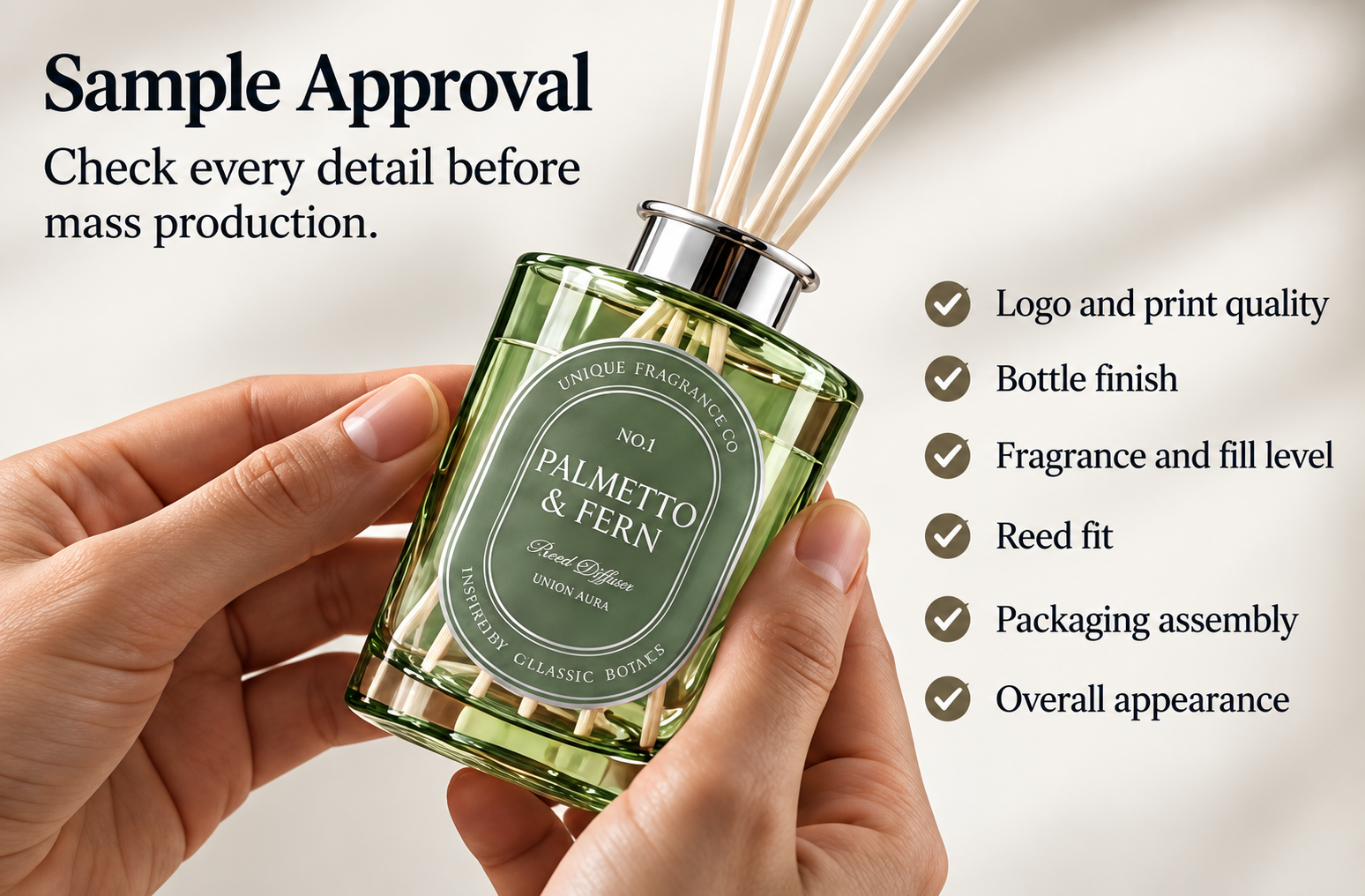
6. Approve a Physical Sample Before Mass Production
Digital artwork approval should not be the final approval.
For a new custom project, request a physical pre-production sample that represents the intended finished product as closely as possible.
Check the sample for:
- Logo size and position
- Print and label alignment
- Color appearance
- Bottle finish
- Fragrance
- Fill level
- Reed fit
- Stopper fit
- Box dimensions
- Barcode readability
- Packaging assembly
For printed packaging, ISO 12647 provides internationally recognized process-control principles for graphic production, reinforcing the importance of controlled print specifications rather than relying only on screen appearance.
Record the approved sample as a golden sample. This gives both buyer and manufacturer a physical reference for mass-production quality control.
7. Test Packaging Before Shipment
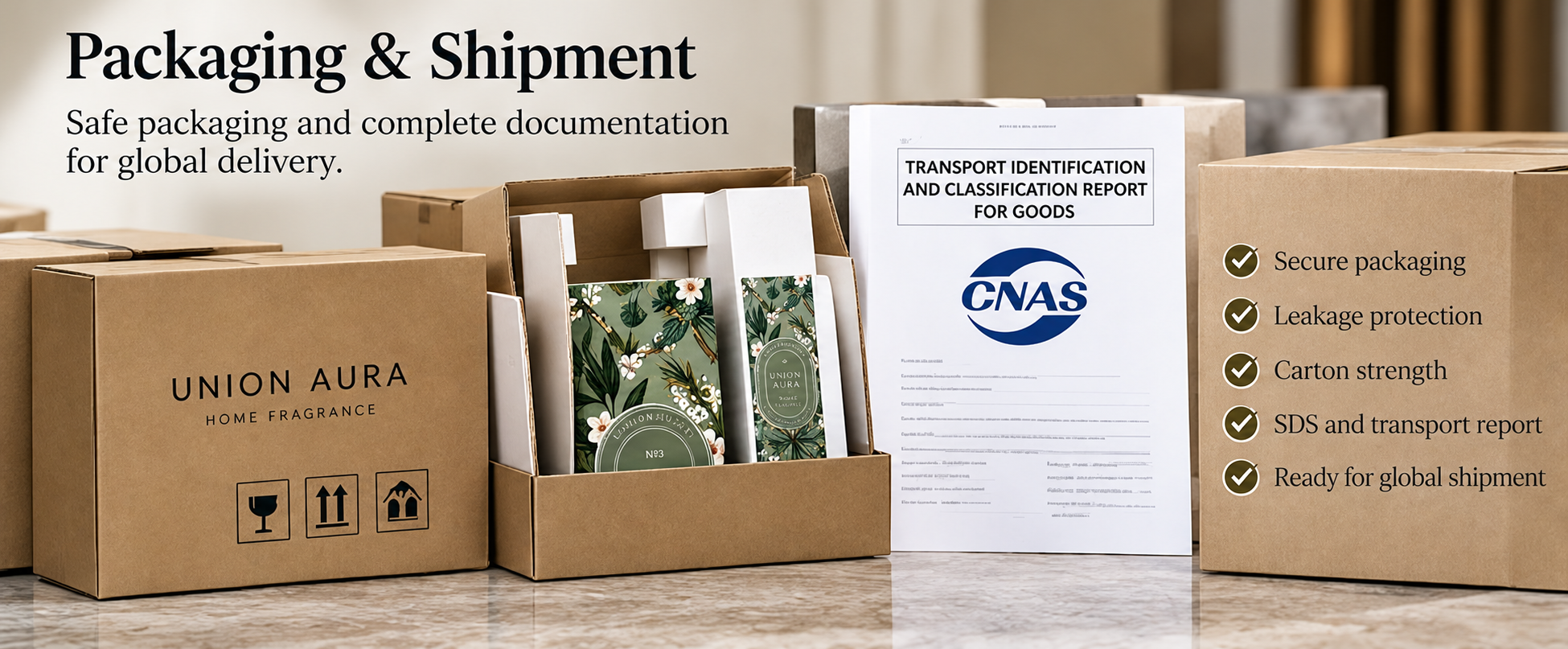
Reed diffusers combine fragrance liquid and glass, so both packaging protection and transport documentation should be checked before shipment.
For export orders, an Identification and Classification Report for Transport of Goods may be required. When applicable, buyers can request documentation issued by a qualified CNAS-accredited laboratory to confirm the transport classification of the finished product.
Packaging checks should cover:
- Leakage protection: secure stopper and closure
- Bottle protection: inserts that limit movement
- Carton strength: suitable for stacking and handling
- Documentation: SDS and required transport identification reports
Transport requirements can vary by formula, shipping method, destination and carrier, so they should be confirmed before mass production and shipment.
From Artwork to a Retail-Ready Reed Diffuser
Develop the Product as One Complete System
The most successful custom reed diffusers are developed as complete products rather than decorated bottles.
Artwork → Dieline → Bottle Decoration → Fragrance → Components → Physical Sample → Packaging Test → Final Approval → Production
For buyers, the key milestone is the golden sample. It connects the digital artwork to a physical standard that production and quality-control teams can actually follow.
At UNION AURA, we support custom and private-label reed diffuser projects from fragrance and bottle selection through artwork adaptation, sampling, packaging and mass production.
If you already have your logo or packaging artwork, send us your artwork file, target bottle size, fragrance direction, expected quantity and target market to start a custom reed diffuser project.